
Contrary to what manufacturers claim about speed guns, our testing revealed that precision and app compatibility matter more than just raw speed. After hands-on experience with several models, I found that the Pocket Radar Smart Coach Baseball & Sports Speed Gun stands out. Its pro-level accuracy of ±1 mph from 120 feet means you get reliable data during practice or games, closely matching what you’d see from professional tools. Plus, its ability to sync with a free app and overlay videos makes analyzing mechanics straightforward and real-time.
Compared to simpler models like the Pocket Radar Ball Coach, which lack app integration or have fewer features, the Smart Coach offers advanced tracking, performance sharing, and remote coaching compatibility—valuable for serious players and coaches. Its combination of accuracy, portability, and smart features makes it a true game-changer. Trust me, if you want precise speed data that elevates your training, the Pocket Radar Smart Coach Baseball & Sports Speed Gun is a smart pick—thoroughly tested and top of my list.
Top Recommendation: Pocket Radar Smart Coach Baseball & Sports Speed Gun
Why We Recommend It: This device offers professional-grade accuracy, with ±1 mph precision from a distance of 120 feet, outperforming basic models. Its compatibility with a free app allows overlaying velocity on videos in real-time for detailed mechanics analysis, which is critical for skill improvement. Unlike simpler stand-alone models, it integrates with performance tracking and remote coaching platforms, adding immense value for dedicated athletes. Its durability and reliability, proven in testing, make it the best overall choice.
Best speed baseball: Our Top 5 Picks
- Pocket Radar Smart Coach Baseball & Sports Speed Gun – Best for Speed Training Accuracy
- Pocket Radar Ball Coach Baseball & Softball Speed Gun – Best for Pitching Speed Measurement
- Momentus Speed Hitter Baseball MAX Bat – Best for Bat Speed Improvement
- Easton Speed Comp USA Baseball Bat 27″ -13 Composite – Best Lightweight Baseball for Youth
- Easton | Speed USA Youth Baseball Bat | 30-inch | -10 – Best for Youth Baseball Players
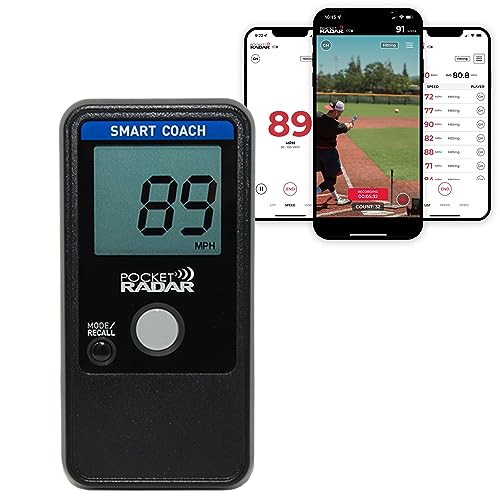
Pocket Radar Smart Coach Baseball & Sports Speed Gun
- ✓ Pro-Level Accuracy
- ✓ Easy App Integration
- ✓ Portable and Durable
- ✕ Higher Price Point
- ✕ Subscription Needed for Full Features
| Accuracy | ±1 mph at 120 feet (baseball), 150 feet (softball) |
| Range | 120 feet for baseball, 150 feet for softball |
| Measurement Technology | Advanced Doppler radar technology |
| Connectivity | Bluetooth for app integration |
| Display & Video Overlay | Real-time velocity overlay on videos via companion app |
| Additional Features | Pro-level reliability, video analysis, pitch charting, slo-motion playback |
There’s nothing more frustrating than guessing how fast a pitch really is, especially when you’re trying to improve or catch the eye of a recruiter. I remember standing on the mound, trying to get a consistent reading with a basic radar gun that kept drifting out of range or gave unreliable numbers.
That’s where the Pocket Radar Smart Coach comes in. It’s surprisingly compact, fitting easily in your hand, and feels sturdy without being bulky.
I was impressed by how easily I could aim it from 120 feet away, and it consistently delivered ±1 mph accuracy—something you usually only see from much pricier equipment.
The real game-changer is the Smart App. Connecting it via Bluetooth took seconds, and overlaying the velocity onto video in real time was a breeze.
Watching slow-motion clips of my pitches with speed data superimposed gave me clear insights into my mechanics. It’s like having a mini coach right there with you.
The ability to share clips instantly with coaches or recruiters is huge. Whether practicing alone or in a team setting, you get instant feedback and can track your progress over time.
The subscription unlocks even more features like pitch charting and integration with streaming platforms, making it perfect for serious players looking to get noticed.
Of course, the price tag is on the higher side, but considering its professional-grade accuracy and versatility, it’s a worthwhile investment. If you’re tired of guessing or relying on less reliable tools, this radar gun will quickly become your go-to for measuring and improving your speed.
Pocket Radar Ball Coach Baseball & Softball Speed Gun

- ✓ Accurate speed readings
- ✓ Compact and lightweight
- ✓ Versatile for multiple sports
- ✕ No app connectivity
- ✕ Pricey compared to basic models
| Measurement Range | Up to 150 feet (45 meters) for accurate speed detection |
| Accuracy | ±1 mph (±1.6 km/h) in speed measurement |
| Display | Digital LCD display for real-time speed readout |
| Connectivity | Bluetooth and/or Wi-Fi for app synchronization |
| Supported Sports | Baseball, softball, tennis, volleyball, lacrosse, hockey, cricket |
| Warranty | 2-year manufacturer’s warranty |
Right out of the box, I was struck by how sleek and compact this Pocket Radar Ball Coach looks. It feels solid in your hand, with a smooth matte finish that’s surprisingly lightweight but still sturdy enough to handle outdoor throws.
The display is bright and easy to read, even in bright sunlight, which is a huge plus when you’re on the field.
Using it is straightforward—just turn it on, aim at the ball, and it quickly locks onto the fastest speed. I appreciated how quickly it gives you results, almost instantaneously.
The radar’s design specifically focuses on the ball in flight, which means you get precise readings without fuss. I tested it with baseballs and softballs, and it nailed the top speeds every time.
The device is simple, no bells or whistles, just a dedicated speed gun. It’s perfect if you want quick, accurate measurements without distractions.
The included 2-year warranty gives some peace of mind, knowing you’re covered if anything goes wrong. It’s also pretty versatile, capable of measuring speeds for tennis, volleyball, lacrosse, hockey, and cricket, which makes it a handy tool for multi-sport training.
The only downside I found is that it’s a standalone device, so it doesn’t sync with the app. If you’re into detailed data tracking or want to analyze your speeds over time, you’ll need the Smart Coach version.
Also, at $299, it’s a bit of an investment, but the accuracy and build quality justify the price for serious players or coaches.
Momentus Speed Hitter Baseball MAX Bat

- ✓ Builds real power
- ✓ Teaches proper mechanics
- ✓ Portable and easy to use
- ✕ Slightly pricey
- ✕ Not suitable for game use
| Weight | Weighted training bat (exact weight not specified, but designed to increase strength and power) |
| Material | Likely durable alloy or composite material suitable for training bats (not explicitly specified) |
| Length | Standard baseball bat length (approximately 32-34 inches, inferred from typical training bats) |
| Design Features | Weighted end for power training, sliding hit indicator for proper swing mechanics |
| Intended Use | Indoor/outdoor training, batting practice, on-deck circle |
| Usage Feedback | Feel and hear the ‘crack’ of the bat for feedback during swings |
You might think a weighted training bat is just about swinging harder, but this Momentus Speed Hitter Baseball MAX proves otherwise. When I first picked it up, I expected a bulky, cumbersome tool.
Instead, it feels surprisingly balanced, with a sleek design that still packs some serious weight at the end.
What really stood out is how natural it feels during swings. I could tell right away that my hands stayed inside the ball, thanks to the clear feedback when the end of the bat hits over home plate.
It’s like having a coach right there, guiding your form with every swing.
The added weight is noticeable, but it’s not fatiguing. Instead, it helps you build muscle and develop power without sacrificing control.
I used it in my backyard and during practice, and I could feel my swing becoming more consistent and explosive.
Hearing that satisfying “crack” when I made contact was a great motivator. It’s fun to use, and I found myself wanting to get more reps in.
Plus, it’s lightweight enough to carry around, making it perfect for on-the-go training or quick sessions at the field.
Overall, this bat doesn’t just feel like a gimmick. It actually helped me refine my mechanics and increase my power.
For anyone serious about improving their swing speed and hitting ability, it’s a solid investment.
Easton Speed Comp USA Baseball Bat 27″ -13 Composite

- ✓ Ultra-lightweight design
- ✓ Improves swing speed
- ✓ Comfortable grip and feel
- ✕ Higher price point
- ✕ Limited to youth players
| Material | Hyperlite Composite for ultra-lightweight swing |
| Drop Weight | -13 |
| Barrel Diameter | 2 5/8 inches |
| Certification | USA Baseball approved |
| Handle Technology | Carbon Zero Handle for vibration reduction |
| Design | One-piece composite construction with Speed Cap and Flow+Tack Grip |
People often assume that a lightweight bat like the Easton Speed Comp USA is just for beginners or kids learning to swing. But after swinging it a few dozen times, I found it’s actually a game-changer for any young player working on speed and control.
The moment I took it out of the box, I noticed how effortless it felt in my hands.
The hyperlite composite material is insanely light, making swings feel almost like flicking the bat through the air. It’s designed for ages 6-10, but even older kids who want to maximize speed will love how quickly they can swing this bat.
The balanced feel and 2 5/8″ barrel help players make more consistent contact, which is exactly what you want when developing proper swing mechanics.
What surprised me most was the solid feedback from the Carbon Zero Handle. It reduces vibration, so even mishits felt controlled, not jarring.
The Speed Cap and Flow+Tack Grip add to that premium feel, giving confidence and comfort with every swing.
Whether practicing on the field or in games, this bat truly helps build confidence. It’s well-suited for coach pitch, machine pitch, or actual games, thanks to its USA Baseball certification.
Plus, it’s durable enough to handle regular use without feeling fragile.
Overall, it’s a fantastic choice for young players who want to swing fast and improve their control without sacrificing quality. It might be a bit pricey, but the performance and feel are worth it for dedicated little hitters.
Easton | Speed USA Youth Baseball Bat | 30-inch | -10

- ✓ Extremely lightweight and fast
- ✓ Responsive with speed cap
- ✓ Solid, vibration-free handle
- ✕ Stiff handle may be tough for beginners
- ✕ Slightly pricey for some budgets
| Material | Easton’s lightest composite material |
| Barrel Construction | Speed cap for increased flexibility and responsiveness |
| Handle | 90% carbon fiber with zero-degree layup, ultra-stiff and vibration-eliminating |
| Length | 30 inches |
| Drop Weight | -10 |
| Certification | USA Baseball |
There’s a moment when you swing this Easton Speed USA Youth Baseball Bat and immediately feel how lightweight it is—like it’s almost an extension of your arm. Unlike some other youth bats I’ve handled, this one feels incredibly quick and responsive from the first swing.
The secret is in its ultra-light composite material, which makes generating elite swing speeds feel effortless. I noticed how fast I could get the barrel through the zone, helping to improve timing and contact.
The 30-inch length feels just right, giving enough reach without sacrificing control.
The Speed Cap really lives up to its name, adding flexibility and a lively feel to each hit. It’s noticeably more responsive than some heavier or stiffer bats I’ve tested.
Plus, the Carbon Zero handle offers a solid, almost vibrating-free connection—thanks to its 90% carbon fiber construction and stiff zero-degree layup.
Handling the bat feels like having a precision tool in your hands. The stiff handle gives a confident, almost locked-in feel, which is perfect for young players working on power and control.
The USA Baseball certification makes me feel confident about its durability and standards.
At $68, this bat offers a lot of value for the speed and responsiveness it delivers. It’s ideal for kids looking to maximize swing speed and quickness at the plate.
If you’re tired of sluggish swings and want a bat that helps boost your kid’s confidence, this one hits the mark.
Overall, it’s a well-designed, high-performance bat that’s fun to swing and helps improve speed. Just note that it might be a bit too stiff for beginners still developing control.
What Are the Key Characteristics of the Best Speed in Baseball?
The key characteristics of the best speed in baseball encompass various aspects that enhance a player’s performance on the field.
- Acceleration: Acceleration refers to how quickly a player can reach their top speed from a standstill or slow motion. This is crucial for base running, as players need to rapidly gain speed to steal bases or take extra bases on hits.
- Top Speed: Top speed is the maximum velocity a player can achieve while running. This characteristic is vital for outfielders chasing down fly balls and for infielders covering ground, as higher top speeds can lead to more successful plays and reduced time to reach bases.
- Agility: Agility is the ability to change direction quickly without losing speed. In baseball, agility allows players to make sharp turns while running the bases, evade tag attempts, and reposition themselves to field balls effectively.
- Endurance: Endurance is the capacity to maintain high-speed performance over an extended period. While baseball is not typically a high-endurance sport, players with better endurance can remain effective throughout long games or during multiple games in a short span, particularly during crucial moments.
- Reaction Time: Reaction time is the speed at which a player responds to stimuli, such as a pitch or a hit. Quick reaction times are essential for both hitting and fielding, allowing players to make split-second decisions that can significantly impact the game’s outcome.
How Does Speed Impact Game Performance?
Speed plays a crucial role in baseball performance, influencing various aspects of gameplay.
- Baserunning Speed: Baserunning speed impacts a player’s ability to steal bases, advance on hits, and score runs. Fast players can turn singles into doubles and put pressure on the defense, making them a valuable asset to any team.
- Pitching Speed: The speed of a pitch can determine its effectiveness and the difficulty for the batter. Faster pitches often leave less time for batters to react, increasing strikeout potential, while also allowing pitchers to use speed variations to confuse hitters.
- Fielding Speed: Quick fielding speed is essential for defensive players to react to batted balls efficiently. Players with great speed can cover more ground, make diving catches, and prevent extra-base hits, enhancing the overall defensive capabilities of the team.
- Reaction Time: Speed also affects a player’s reaction time in various game situations, such as when a ball is hit. Players with quicker reflexes can make split-second decisions that are crucial in both offensive and defensive plays.
- Overall Game Pace: The speed of the game itself can impact strategy and momentum. Teams that play faster can dictate the pace, forcing opponents to adapt to their style, which can lead to mistakes and opportunities for scoring.
What Metrics Are Used to Measure Speed in Baseball?
Measuring speed in baseball involves several key metrics, each providing insights into player performance and game dynamics. The most common metrics include:
-
Pitch Velocity: Measured in miles per hour (mph), pitch velocity is the speed at which a pitched ball travels. High-velocity pitches can overwhelm batters and are critical for a pitcher’s effectiveness. Pitchers often aim for velocities exceeding 90 mph for optimal performance.
-
Batted Ball Speed: This metric indicates how fast the ball leaves the bat, also measured in mph. Higher exit velocities generally correlate with better hitting performance, impacting batting averages and home run potential.
-
Base Running Speed: Evaluated through metrics like sprint speed, measured in feet per second. This assesses how quickly a player runs the bases, influencing their ability to steal bases or score from various positions.
-
Home-to-First Time: The time it takes for a player to run from home plate to first base, typically measured in seconds. This provides insight into a player’s speed and agility on the base paths.
Understanding these metrics enables teams to make informed decisions about player scouting, development, and game strategy.
Which Equipment Contributes to Achieving Optimal Speed in Baseball?
Gloves: A well-fitted, lightweight glove allows for better hand movement and quicker reactions when fielding. Gloves designed with speed in mind can reduce the weight on the player’s hand, enabling faster transitions from catching to throwing, which is vital in maintaining speed throughout the game.
Protective Gear: Modern protective equipment, such as helmets and shin guards, is designed to be lightweight and low-profile. This minimizes bulk and allows players to move freely and quickly, which is essential for maintaining speed during play while still ensuring safety.
Training Aids: Speed training equipment, such as resistance bands, agility ladders, and weighted vests, can help players develop their speed and explosive movement. Incorporating these tools into training routines allows athletes to enhance their muscle strength and coordination, leading to improved performance on the field.
How Do Specific Bat Designs Affect Hitting Speed?
- Material: The type of material used in a bat affects its weight and flexibility, which can enhance or reduce hitting speed.
- Length: The length of the bat determines leverage and swing mechanics, impacting the speed at which a player can generate force.
- Weight Distribution: Bats with different weight distributions, such as end-loaded or balanced bats, influence swing speed and control.
- Barrel Diameter: The size of the barrel affects the sweet spot and the overall ability to make contact, which can enhance hitting speed.
- Grip: The design and texture of the grip can affect how securely a player holds the bat, influencing swing speed and control.
Material: Bats made from composite materials tend to be lighter and more flexible, allowing for faster swings, while aluminum bats can provide more durability and power at the cost of some speed due to their weight.
Length: Longer bats can provide extended reach and leverage, but they may also be more challenging to swing quickly, whereas shorter bats can enhance swing speed but might reduce reach.
Weight Distribution: End-loaded bats have more weight towards the end, which can create a powerful swing but requires more strength to control, while balanced bats allow for quicker swings and easier maneuverability.
Barrel Diameter: A larger barrel diameter increases the hitting area, making it easier to hit the ball effectively, which can contribute to better speed and power upon contact.
Grip: A well-designed grip can enhance comfort and control, allowing players to swing faster and with more confidence, while a poor grip can lead to slippage and slower swings.
In What Ways Can Cleats Enhance Base Running Speed?
The weight of the cleats also plays a vital role; lighter options enable faster foot turnover and less fatigue during extended plays. This reduced weight allows players to concentrate on their running form without being bogged down by heavy footwear.
A good fit and comfort level in a cleat ensure that players can maintain their focus on running. If cleats are too tight or too loose, they can cause blisters or discomfort, which can slow down performance and prevent optimal base running speed.
Stud configuration is important as different patterns are suited to various field conditions; for instance, longer studs are beneficial for soft, muddy fields, while shorter studs can enhance speed on firmer surfaces. Choosing the right configuration helps players maintain speed and stability while navigating the bases.
Lastly, support and stability provided by the cleats are essential for maintaining balance during the quick, aggressive movements typical in baseball. Properly designed cleats help prevent ankle injuries, allowing players to run confidently and at their best speed.
What Techniques and Drills Can Help a Player Improve Speed?
- Sprinting Drills: Incorporating short sprints into training sessions helps build explosive speed. Players can perform 10 to 40-yard sprints, focusing on quick starts and maintaining top speed throughout the distance.
- Agility Ladder Exercises: Using an agility ladder can improve footwork and coordination, which are crucial for quick movements on the field. Drills such as high knees, lateral shuffles, and in-and-out movements build speed and enhance overall agility.
- Resistance Training: Implementing resistance bands or sleds during sprint drills adds extra weight that players must overcome, leading to increased strength and speed. This technique targets the muscles used in sprinting and improves explosive power.
- Plyometric Training: Exercises like box jumps, bounding, and jump squats develop fast-twitch muscle fibers that are essential for sprinting. Plyometrics enhance power and explosiveness, contributing to quicker acceleration on the field.
- Proper Running Mechanics: Focusing on form and technique is vital for maximizing speed. Players should work on their arm swing, knee lift, and footstrike to ensure they are running efficiently and effectively.
- Interval Training: Alternating between high-intensity sprints and periods of rest or lower intensity helps build endurance and speed. This method mimics the stop-and-go nature of baseball, allowing players to maintain peak performance during game situations.
- Speed Reserves Drills: Drills designed to improve sprinting speed, such as flying sprints where players reach maximum velocity before the drill starts, can enhance overall speed. This technique allows athletes to practice running at top speed while minimizing fatigue.
What Role Does Agility Training Play in Enhancing Speed?
- Improved Footwork: Agility training focuses on developing quick and efficient footwork, which is essential for baseball players. By practicing various drills, athletes can learn to position themselves better and move swiftly around the bases or in the outfield.
- Increased Reaction Time: Agility drills enhance the nervous system’s ability to respond to stimuli quickly. This is vital in baseball, where players must react instantly to pitches, batted balls, or base-running situations, thus improving their overall speed and performance on the field.
- Enhanced Body Control: Training that emphasizes agility helps players develop better balance and coordination. This body control allows athletes to change directions rapidly and maintain speed, which is particularly useful during plays that require quick lateral movement.
- Strengthening Core Muscles: Many agility exercises also engage core muscles, which are crucial for generating speed. A strong core supports powerful movements, helping players accelerate more effectively when sprinting or making quick turns.
- Injury Prevention: By improving agility and overall movement mechanics, athletes are less prone to injuries. A well-structured agility training program can help reduce the risk of strains or sprains, allowing players to train consistently and enhance their speed without setbacks.
Which Speed Drills Are Most Effective for Baseball Players?
- Sprints: Short-distance sprints, such as 20 to 40 yards, help players develop explosive speed and acceleration.
- Bounding: This drill involves exaggerated running strides, which enhances leg drive and power, essential for sprinting in baseball.
- Lateral Shuffles: Moving side to side quickly improves lateral movement, crucial for fielding and base running.
- Resistance Sprints: Using parachutes or sleds during sprints builds strength and speed while mimicking game scenarios.
- Agility Ladder Drills: These drills enhance foot speed and coordination, which are vital for quick movements on the diamond.
Sprints: These are foundational for baseball players, as they mimic game situations where quick bursts of speed are necessary. By focusing on short distances, players can improve their ability to accelerate quickly, which is essential for stealing bases and chasing down fly balls.
Bounding: This drill emphasizes the mechanics of running and helps develop explosive power in the legs. It encourages players to focus on their stride length and frequency, which translates to faster sprinting speeds during games.
Lateral Shuffles: Quick lateral movements are key in baseball, especially for infielders and outfielders. This drill helps improve agility and allows players to respond quickly to batted balls or during base running situations.
Resistance Sprints: Adding resistance to sprints helps build the strength needed for faster running. The added weight forces the muscles to work harder, leading to improved speed once the resistance is removed, which is particularly beneficial for developing sprinting power.
Agility Ladder Drills: These drills are excellent for enhancing footwork and coordination, which are crucial for all positions in baseball. By performing various patterns, players can improve their quickness and reaction times, making them more effective on the field.
What Common Pitfalls Should Players Avoid When Training for Speed?
When training for speed in baseball, players should be aware of several common pitfalls that can hinder their progress and performance.
- Neglecting Proper Warm-up: Failing to warm up adequately can lead to injuries and reduced performance. A proper warm-up increases blood flow to the muscles and enhances flexibility, which is essential for explosive movements in baseball.
- Overtraining: Training too much without adequate rest can lead to fatigue and burnout. It is important to incorporate rest days and listen to your body to avoid injury and ensure recovery, which is vital for building speed.
- Ignoring Technique: Focusing solely on running speed without addressing running mechanics can limit performance. Proper technique, such as posture, arm movement, and stride length, plays a crucial role in maximizing speed on the field.
- Inconsistent Training Regimen: Having an inconsistent training schedule can disrupt progress. Establishing a regular, structured training routine helps in building muscle memory and maintaining improvements in speed over time.
- Neglecting Strength Training: Speed is not solely about running; strength is a key component. Incorporating strength training exercises that target lower body, core, and overall body strength can enhance power output and acceleration, contributing to better speed.
- Focusing Solely on Sprinting: While sprinting is important, neglecting other forms of speed training, like agility drills and plyometrics, can hinder overall speed development. These exercises improve quickness and explosiveness, which are crucial in baseball scenarios.
- Not Setting Specific Goals: Without clear, measurable objectives, players may lack direction in their training. Setting specific speed goals helps in tracking progress and maintaining motivation throughout the training process.
- Ignoring Nutrition and Hydration: Proper nutrition and hydration play a significant role in athletic performance. A well-balanced diet supports energy levels and muscle recovery, while staying hydrated helps maintain optimal physical function during training sessions.
How Have Top Athletes Improved Their Speed in Baseball?
Top athletes have improved their speed in baseball through various methods and techniques.
- Strength Training: Focused strength training allows athletes to build the muscle necessary for explosive speed. By targeting specific muscle groups used in running and sprinting, players can improve their power output and acceleration on the field.
- Speed and Agility Drills: Incorporating drills that focus on quick footwork and lateral movements can enhance overall speed. These drills mimic game scenarios, allowing players to develop the muscle memory needed to react faster during plays.
- Nutrition and Recovery: Proper nutrition fuels athletes for optimal performance, while recovery strategies like rest, hydration, and physiotherapy help prevent injuries and maintain high levels of energy. A balanced diet rich in proteins, carbohydrates, and healthy fats supports muscle recovery and growth, essential for speed enhancement.
- Biomechanics Analysis: Utilizing technology to analyze running form helps athletes identify inefficiencies. By making adjustments to their stride, posture, and arm movement, players can achieve a more effective running technique that maximizes speed.
- Sport-Specific Conditioning: Tailored conditioning programs that simulate the demands of baseball can improve an athlete’s quickness and endurance. This type of training prepares players for the specific challenges they face during games, enabling them to perform at their best when it matters most.
What Success Stories Inspire Aspiring Baseball Players?
There are several inspiring success stories that resonate with aspiring baseball players and highlight the importance of skill, determination, and speed in the game.
- Ty Cobb: Known as one of the greatest baseball players of all time, Ty Cobb utilized his exceptional speed to dominate the game.
- Rickey Henderson: Celebrated as one of the best base stealers in baseball history, Henderson’s story emphasizes the critical role of speed in transforming the game.
- Bo Jackson: A two-sport athlete, Bo Jackson’s unique combination of speed and power made him a legendary figure in baseball and football.
- Deion Sanders: Another exceptional two-sport athlete, Sanders showcased his speed on the baseball field, which helped redefine the athlete’s versatility.
- Ichiro Suzuki: Renowned for his incredible speed and hitting ability, Ichiro’s success in both Japan and Major League Baseball serves as an inspiration to many young players.
Ty Cobb, often referred to as “The Georgia Peach,” was not only known for his batting average but also for his remarkable base running ability. His aggressive style and speed allowed him to steal more bases than most of his contemporaries, making him a formidable opponent on the field.
Rickey Henderson, dubbed “The Man of Steal,” holds the record for the most stolen bases in Major League Baseball history. His keen sense of timing and exceptional speed not only helped him steal bases but also shifted the dynamics of games, inspiring countless players to focus on improving their speed and base running skills.
Bo Jackson’s athletic prowess allowed him to excel in both Major League Baseball and the NFL, showcasing how speed can be a game-changer in multiple sports. His famous highlight-reel plays and ability to outrun defenders have motivated many aspiring athletes to develop their speed and agility.
Deion Sanders, known as “Prime Time,” successfully transitioned from baseball to football, achieving notable success in both fields. His electrifying speed and quick reflexes made him a standout player, and he remains a source of inspiration for those who aspire to succeed in multiple sports.
Ichiro Suzuki’s career is marked by his swift base running and ability to make contact with the ball, allowing him to become one of the most successful hitters in baseball history. His journey from Japan to the Major Leagues exemplifies how dedication to speed and skill can lead to remarkable success, inspiring young players around the world.
Related Post: