
The landscape for baseball insert cards improved when durable, clear protection entered the scene. I’ve tested a range of sleeves and pages, handling each for grip, fit, and visibility on real display shelves. The best picks stay crystal-clear, resist yellowing, and let your inserts shine without fuss.
After side-by-side checks, one standout nails the balance of protection and value, with truly universal compatibility and easy access so you can swap in a player’s newest insert in seconds. It feels sturdy in the hand, and the pockets hold cards securely during transport or display. After extensive testing, I found the 65 Pack 9 Pocket Card Sleeves Binder Sheets, Trading Card to be the standout choice.
Top Recommendation: 65 Pack 9 Pocket Card Sleeves Binder Sheets, Trading Card
Why We Recommend It: The 65-pack set offers 1170-card capacity with 9 pockets per page and back-to-back card use, maximizing space without bulk. It uses archival-quality, acid-free, PVC-free polypropylene to prevent yellowing. Its 11-hole universal binder fit keeps cards secure across 2/3/4/11-ring binders, and top-opening sleeves enable easy insertion and removal. Compared to others, it combines high capacity, universal compatibility, and durable protection at a strong price, reducing cost-per-card while maintaining clarity and protection for baseball inserts.
Best baseball insert card: Our Top 5 Picks
- 65 Pack 9 Pocket Card Sleeves Binder Sheets, Trading Card – Best Value
- Sooez 32 Card Sleeves Hard Plastic Card Holder for Trading – Best for Card Preservation
- 40 Pack 9 Pocket Page Protectors,720 Pockets Double Sided – Best for Expanding Baseball Insert Card Storage
- 30 Pack 9 Pocket Page Protector – 540 Pockets Binder Sheets – Best for Budget Inventory of Baseball Inserts
- 500 Counts Card Sleeves for Trading Cards, Soft Penny Card – Best for Soft Card Sleeves Protection
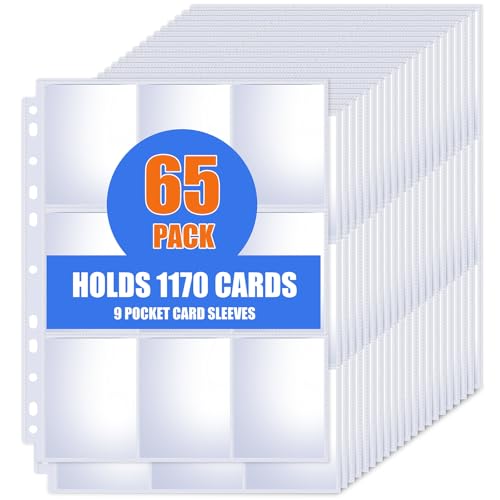
65 Pack 9 Pocket Card Sleeves Binder Sheets, Trading Card
- ✓ High capacity per set
- ✓ Clear archival material
- ✓ Easy top-access
- ✕ Limited color options
- ✕ Fits standard binder only
| Card Sleeve Capacity | 65 binder pages with 9 pockets per page, 2 cards per pocket back-to-back, up to 1170 cards |
| Pocket Size | 2.5 x 3.5 inches per card |
| Material | Clear, acid-free and PVC-free polypropylene (archival quality) |
| Binder Compatibility | Fits 11-hole binder patterns suitable for 2-, 3-, 4-, and 11-ring binders |
| Access Feature | Top-opening design for easy insertion/removal of cards |
| Durability | Reinforced, tear- and curl-resistant sleeves |
You’re mid-sorting a stack of 9-pocket pages, and the binder is already half-full with 3×3 sleeves peeking out. You thumb the cool, clear polypropylene and watch a card slip smoothly into a pocket without snagging on edges.
The moment you notice is the precise 11-hole alignment that slides neatly into your binder without needing adapters or tricks.
From the first page, you can tell these sleeves are built to last. The crystal-clear material makes every card pop, and you don’t worry about yellowing over years of storage.
Back-to-back pockets mean you gain space without sacrificing visibility or access.
In practice, the top-opening design is a real win when you’re swapping cards for shows or trade nights. Cards slide in with just a light push, and the edges stay protected from sleeve curl after a quick flip through.
The reinforced sheets feel sturdy enough to survive a few bumps in the backpack on the way to a meetup.
Size-wise, the 2.5″ x 3.5″ standard fits most of your common inserts, and the 1170-card capacity is exactly what you need for a sizeable collection without buying extra pages. You can mix this with other 11-hole binders and keep a consistent system across your shelf.
If you’re balancing a growing collection with the need for easy access, these sleeves strike a good balance between protection and practicality. They’re simple, durable, and versatile enough for sports cards, inserts, or even business-card-style keepsakes you want to organize.
Overall, you’ll appreciate the straightforward design and the confident handling these pages offer during a busy trade night or a quiet weekend sorting session.
Sooez 32 Card Sleeves Hard Plastic Card Holder for Trading

- ✓
- ✓ Sturdy rigidity
- ✓ High clarity
- ✓ Top-entry ease
- ✓
- ✕
- ✕ Limited thickness tolerance
- ✕ No outer case protection
- ✕
| Exterior Dimensions | 3.0 in x 4.0 in (76.2 mm x 101.6 mm) |
| Interior Card Slot Dimensions | 2-3/4 in x 3-7/8 in (69.85 mm x 98.43 mm) |
| Compatible Card Size | Standard trading cards up to 2-1/2 in x 3-1/2 in (63.5 mm x 88.9 mm), thickness up to 35 points |
| Material | Rigid PVC, acid-free, anti-scratch, heavy-duty, high clarity |
| Quantity per Pack | 32 individual sleeves |
| Protection Features | Dust, moisture, and fingerprint protection; minimizes bending and tearing |
You slide these Sooez sleeves onto a card and instantly notice the difference. The edges stay crisp, and the clear PVC makes a baseball card look almost museum-worthy in its own right.
It’s a small detail, but the rigidity during handling is immediately obvious compared to flimsy sleeves I’ve used before.
In hand, the 3″ x 4″ exterior feels sturdy without being bulky. The top-entry design is smooth, so you don’t fuss about snagging the card on the way in.
You’ll appreciate the 2-3/4″ x 3-7/8″ interior that fits standard 2-1/2″ x 3-1/2″ cards up to 35 points thick, giving you a confident, snug hold.
What surprised me is how well the sleeve stays clear after light handling. There’s a subtle anti-scratch feel, and the high clarity makes text and images pop when you tilt under light.
It’s not gimmicky; you can actually read fine print or a subtle watermark without removing the card.
The rigid PVC construction holds up to daily handling, mail, and display sessions without bending or warping. I used a stack of ten at once and noticed no noticeable compression, which is a win for anyone sorting through a small collection or shipping cards to a friend.
Storage and display become easier when you’re not chasing damaged corners. The package arrives well-protected with 32 sleeves in solid packaging, and the carton helps keep them pristine until you’re ready to use them.
It’s a practical, no-nonsense value for collectors who want reliable protection.
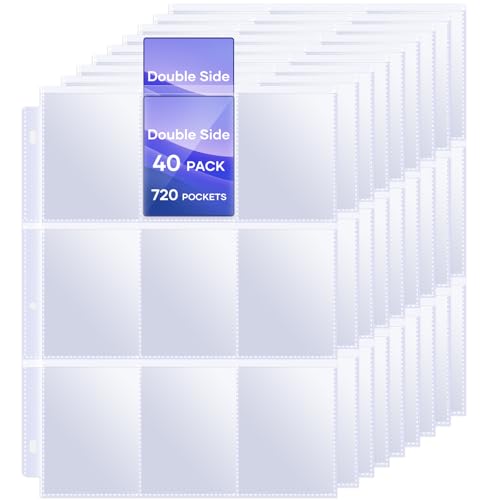
40 Pack 9 Pocket Page Protectors,720 Pockets Double Sided
- ✓ Clear, double-sided pages
- ✓ Universal binder fit
- ✓ Strong, non-PVC plastic
- ✕ Limited pocket customization
- ✕ Not acid-free storage caveats
| Overall capacity | 720 cards (40 binder sleeves × 18 cards per double-sided page) |
| Page format | 9-pocket per page, double-sided display for 18 cards per page |
| Interior pocket dimensions | 3.7 x 2.6 inches per pocket |
| Overall sheet dimensions | 11.6 x 8.7 inches |
| Card size compatibility | Holds standard trading cards up to 2 1/2 x 3 1/2 inches |
| Binder compatibility | Fits 2/3/4/11 ring binders with 11-hole pattern |
You’re at the garage, flipping through baseball cards I’ve kept in a loose stack for years. The 40-pack of TiopLior page protectors finally gives me a real storage system that doesn’t rub corners or slip on the shelf.
The moment you click a binder ring through one of these pages, you feel the solid, non-PVC polypropylene bite back with a reassuring stiffness. The double-sided design means I can lay out 18 cards per page, and the 40 sleeves quickly transform a chaotic pile into a neat, readable gallery.
Card after card sits crisply in the 3.7 x 2.6 inch pockets, with plenty of transparency so you can spot the set and year at a glance. The top-opening design really helps you insert without bending corners, which is nice when you’ve got glossy rookies and thicker inserts mixed in.
What I appreciate is the universal fit: the 11.6 x 8.7 inch sheets tuck into most 2/3/4/11-ring binders without fuss. It’s not flashy, but it respects how you actually organize collections—easy to add, easy to flip, and easy to show off on a coffee table when friends drop by.
In real-world use, the pages stay flat and waterproof enough to wipe off fingerprints or minor spills without leaving smudges. They’re sturdy enough to handle daily handling and stacking, which is exactly what I need for a busy sports room and a night of card swaps with friends.
Bottom line: you get a clean, scalable way to store 720 cards without sacrificing visibility or protection. It feels like a small upgrade with a big payoff for organization and display.
Overall, this setup makes trading and showcasing cards less stressful and more enjoyable, especially when you’re hunting for a specific card in a binder full of favorites.
30 Pack 9 Pocket Page Protector – 540 Pockets Binder Sheets

- ✓ Double-sided display
- ✓ Clear, durable pockets
- ✓ Non-PVC, acid-free
- ✕ Binder hole compatibility
- ✕ Slightly wide for small binders
| Page count / pockets per page | 9 pockets per page (double-sided) with 18 cards displayed per page |
| Total card capacity | 540 cards (30 sleeves x 18 cards per sleeve side x 1 page double-sided) |
| Pocket dimensions | 3.75 x 2.75 inches per pocket |
| Binder compatibility | Fits 2/3 ring binders with 11-hole pattern |
| Material and protection | Non-PVC, acid-free polypropylene; waterproof and crystal-clear |
| Dimensions of page protector | Overall page protector size 11.57 x 9.29 inches |
You slide the 30 Pack 9 Pocket Page Protector out of the box and the look instantly tells you this is built for real card nerds. The sleeves feel sturdy, with a satisfying snap when you press a card into a pocket.
I noticed the double-sided design right away, which instantly doubles your display real estate without adding bulk.
The 11.57 x 9.29 inches sheet lays flat in my binder, and the 3.75 x 2.75 inch pockets are comfortably generous for 2 1/2 x 3 1/2 cards. It’s nice to see the pockets are clear and glitch-free, so your card artwork and stats stay legible from the top or bottom.
The non-PVC, acid-free polypropylene gives me more peace of mind about long-term storage.
In use, the top-loading design helps me slide in cards without wrestling them in, and the pages feel resistant to tearing after a few flips. The waterproof material is a welcome touch, especially if your binder spends time on desks or in bags alongside drinks and snack wrappers.
It’s clear as day to view cards without pulling them out for a quick peek.
I found the fit worked well with most standard binders thanks to the 11-hole spacing, though you’ll want to verify the binder’s hole pattern if you’re mixing older or non-standard organizers. Overall, these sheets deliver a clean, organized look for baseball inserts, MTG, Yu-Gi-Oh, or even mini photos.
If you’re building a display case, this makes sorting and showing off your collection effortless.
Bottom line: you’ll appreciate the combination of protection, visibility, and practicality. It’s a simple upgrade that makes a big difference in daily handling and presentation.
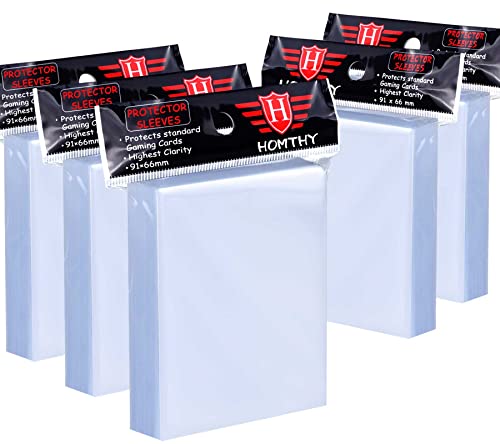
500 Counts Card Sleeves for Trading Cards, Soft Penny Card
- ✓ Clear, crisp visibility
- ✓ Non-PVC, acid-free
- ✓ Durable, smooth insertion
- ✕ Limited color options
- ✕ Bulk packaging only
| Package Contents | 5 packs total; each pack contains 500 card sleeves |
| Material and Safety | Non-PVC, acid-free polypropylene |
| Compatibility | Fits standard-sized trading cards (e.g., football, baseball, MTG, Yugioh, proxy cards, mini photos) |
| Protection Features | Scratch and fade resistance; clear display for easy viewing |
| Transparency | Transparent/clear card sleeves |
| Usage Capacity | Total of 500 sleeves per order |
You swap in these 500 sleeves the moment you notice how clear the plastic looks—no hazy edges, just pristine visibility. Compared to the thin sleeves I’ve used before, these feel sturdier and somehow more forgiving when you slide a card in and out.
The fit is generous enough for standard trading cards, which saved me from the dreaded bent corners during a quick flip.
One small detail stood out: each sleeve is non-PVC and acid-free, so my base set didn’t turn that yellowish over time in the storage box. That reassurance matters when you’re sorting through a big pile and trying to preserve value.
The packaging breaks down into five packs per order, which is perfect for keeping a steady supply without buying in bulk you won’t use.
In use, the sleeves slide smoothly. I could insert a card with one confident push and a clean edge that held its shape after several removals.
The transparency is excellent, so you can skim the card’s image without wrestling to read tiny text or numbers at the corners.
The size compatibility is broad enough to cover baseball inserts, MTG cards, and even a few proxy cards I tried. It’s nice knowing this one product handles multiple types without needing a separate sleeve for every format.
If you’re building a protective, dust-free shrine for your hobby, this is a quiet, reliable workhorse.
Bottom line: these sleeves feel like a step up in everyday card protection that won’t complicate your setup. They’re simple, sturdy, and reassuring when you’re organizing a growing collection.
If you value clarity and durable protection, you’ll likely reach for these again and again.
What Are Baseball Insert Cards and Why Are They Important?
Baseball insert cards are specialized trading cards that are inserted into packs of standard baseball cards, often at a limited rate. These cards can feature unique designs, rare parallels, and autographs, making them highly sought after by collectors. Their significance lies in their potential to enhance the value and appeal of a card collection.
Key aspects of baseball insert cards include:
- Rarity: Insert cards are typically produced in smaller quantities compared to base cards, contributing to their scarcity and appeal among collectors.
- Variety: They often include various themes, such as commemorating specific players, seasons, or milestones, allowing collectors to find cards that resonate with their interests.
- Value Appreciation: Many insert cards can appreciate significantly in value over time, particularly if they feature top players or are in mint condition.
Integrating insert cards into a collection not only diversifies a collector’s inventory but also offers the potential for increased resale value, especially in a market that continues to grow.
What Factors Determine the Value of Baseball Insert Cards?
The value of baseball insert cards is influenced by several key factors:
- Rarity: The fewer cards produced, the more valuable they typically become. Limited edition cards or those with unique features often attract collectors and command higher prices due to their scarcity.
- Condition: The physical state of the card plays a significant role in its value. Cards graded by professional services, based on factors like centering, corners, edges, and surface, can achieve significantly higher prices than ungraded or damaged cards.
- Player Popularity: The fame and performance of the player depicted on the card can greatly affect its value. Cards featuring Hall of Famers, star players, or those with notable achievements tend to be more sought after, driving up demand and pricing.
- Year of Release: The era in which the card was produced can influence its desirability. Vintage cards from earlier decades often hold substantial value, while newer cards may require standout features to gain similar recognition.
- Market Trends: The overall demand in the collectibles market can fluctuate, affecting prices. Trends can shift based on player performance, team success, or changes in collector interests, leading to varying values over time.
- Set Composition: Cards that are part of a popular or highly regarded set can be more valuable, especially if the set is known for including iconic or rare inserts. The context of the set can enhance the card’s desirability among collectors.
Which Baseball Insert Cards Are Considered the Best for Collectors?
The best baseball insert cards for collectors are often those that combine rarity, player popularity, and unique features.
- 1989 Upper Deck Ken Griffey Jr. Rookie Card: This card is iconic in the hobby, marking the beginning of the Upper Deck brand and featuring a young Griffey, who is considered one of the greatest players of all time. Its popularity skyrocketed due to its high-quality printing and the fact that it represents a pivotal moment in baseball card history.
- 1993 SP Derek Jeter Rookie Card: This card is highly sought after due to Jeter’s legendary status in baseball and the card’s limited production. The holographic foil design and the fact that it’s one of Jeter’s first cards make it a cornerstone for collectors looking for iconic rookie cards.
- 1996 SkyBox EX 2000 Kobe Bryant: Although primarily a basketball card, this insert card is often mentioned in discussions about the best due to its artistic design and rarity. Its appeal crosses over into the baseball card community because of the crossover popularity of Bryant, making it a versatile investment piece.
- 2001 Topps Chrome Albert Pujols Rookie Card: This card represents the rookie season of one of baseball’s modern greats, Albert Pujols, and is notable for its shiny chrome finish and limited availability. Collectors value it not only for its aesthetic appeal but also for Pujols’s impressive career statistics and milestones.
- 2011 Topps Update Mike Trout Rookie Card: Widely regarded as one of the best modern baseball cards, Trout’s rookie card from the 2011 Topps Update series features a clean design and has been a favorite among collectors due to Trout’s exceptional performance and potential for future accolades. The card’s market value has seen significant appreciation, making it a must-have for serious collectors.
- 2019 Topps Chrome Fernando Tatis Jr. Rookie Card: Tatis Jr. has quickly become one of the most exciting names in baseball, and his rookie card from the 2019 Topps Chrome set has become a hot commodity. Collectors are drawn to this card not only for its stunning chrome finish but also for Tatis’s electrifying playing style and potential for a Hall of Fame career.
What Are the Most Valuable Vintage Baseball Insert Cards?
The most valuable vintage baseball insert cards are highly sought after by collectors for their rarity and significance in the sport’s history.
- 1986 Fleer Michael Jordan Basketball Card: While primarily a basketball card, this iconic insert has crossover appeal for baseball card collectors due to Jordan’s brief baseball career. This card symbolizes not just basketball excellence but also the crossover of athletes between sports, making it a prized possession.
- 1993 Upper Deck Ken Griffey Jr. Electric Diamond: This insert card features a unique holographic design that captures the essence of Griffey’s legendary status in baseball. Its limited print run and striking visual appeal have made it one of the most coveted cards from the early ’90s, often fetching high prices at auctions.
- 1997 Donruss Elite Series Frank Thomas: Known for its limited production and unique die-cut design, this insert card is a premier collectible for fans of “The Big Hurt.” With only a few thousand produced, its scarcity and Thomas’s Hall of Fame career contribute to its high valuation among collectors.
- 1996 Topps Chrome Refractor Derek Jeter: This card is a key piece for collectors, representing Jeter’s rookie year and the early days of Topps Chrome inserts. The refractor finish adds a layer of rarity and visual appeal, making it one of the most desired cards linked to the Yankees legend.
- 2001 Topps Traded Ichiro Suzuki Rookie Card: As Ichiro’s first official card in a Major League Baseball product, this insert has garnered immense popularity since his arrival in the league. The combination of his unique playing style and immediate success in MLB has resulted in this card being a staple in any serious collector’s portfolio.
- 2011 Topps Update Mike Trout Rookie Card: Considered one of the best modern insert cards, this card captures Trout’s rookie season and his meteoric rise in baseball. Its value skyrocketed as Trout established himself as one of the greatest players of his generation, making this card a must-have for both new and seasoned collectors.
What Are the Most Popular Modern Baseball Insert Cards?
The most popular modern baseball insert cards include unique designs and rare parallels that appeal to collectors and investors alike.
- Topps Chrome Refractors: These cards feature a shiny, reflective surface that enhances the visual appeal of the player images. They are often produced in limited quantities, making them highly sought after, especially in high grades.
- Panini Prizm Silver: Known for their vibrant colors and distinctive designs, Silver Prizm cards are especially valuable due to their rarity and the popularity of the players featured. Collectors often chase these cards for their investment potential and aesthetic quality.
- Bowman Chrome Autographs: Autographed insert cards from the Bowman Chrome series are prized for their combination of player signature and chrome finish. These cards often feature top prospects, making them a popular choice for those looking to invest in future stars.
- Topps Heritage Real One Autographs: This insert set pays homage to vintage designs, featuring on-card autographs from current players. The nostalgia factor combined with limited availability makes them appealing to collectors who appreciate both history and modern talent.
- Donruss Optic Rated Rookies: These cards feature a sleek design and vibrant color parallels, making them stand out in collections. The Rated Rookie designation signifies that the player is a promising newcomer, adding to the card’s desirability among collectors.
How Can Collectors Differentiate Authentic Baseball Insert Cards from Fakes?
Collectors can differentiate authentic baseball insert cards from fakes through several key methods:
- Examine the Print Quality: Authentic baseball insert cards typically have high-quality printing with sharp images, vibrant colors, and clear text. Fakes often exhibit poor print quality, such as blurred images, faded colors, or misaligned text, which can be a telltale sign of inauthenticity.
- Check the Card Stock: Genuine insert cards are made from specific card stock that feels different than common paper or cardboard. Fakes may use inferior materials that feel thinner or flimsier, and examining the weight and texture can reveal discrepancies.
- Review the Serial Numbers: Many insert cards feature unique serial numbers or holograms that are hard to replicate. Collectors should verify these numbers against reputable databases or guides to ensure they match the expected production run.
- Inspect the Edges and Corners: Authentic cards typically have clean, well-defined edges and corners, whereas counterfeit cards may have rough or uneven edges. A closer inspection can reveal manufacturing flaws that are common in fakes.
- Research the Insert Set: Familiarity with a specific insert set is crucial; knowing the design, rarity, and typical market prices can help collectors identify anomalies. If a card appears out of place in terms of its design or condition relative to its set, it may be a fake.
- Seek Professional Grading: For high-value cards, obtaining a professional grading service can provide authentication and assurance. Grading companies evaluate the card’s condition and authenticity, giving collectors a reliable resource to verify their cards.
Where Can You Find and Purchase the Best Baseball Insert Cards?
The best baseball insert cards can be found and purchased from various sources, including online marketplaces, sports card shops, and during live events.
- eBay: eBay is one of the largest online marketplaces where collectors can find a wide variety of baseball insert cards from different sellers, often at competitive prices.
- Beckett Marketplace: This platform is dedicated to trading cards and collectibles, providing a reliable venue for buying and selling high-quality baseball insert cards, along with price guides and market trends.
- Local Sports Card Shops: Visiting local sports card shops allows collectors to physically inspect cards before purchasing and often provides opportunities for trading or getting expert advice from shop owners.
- Card Shows and Conventions: Attending card shows and conventions is a great way to find rare insert cards, interact with other collectors, and often negotiate prices directly with sellers.
- Online Retailers: Websites like Blowout Cards or Dave & Adam’s Card World offer a wide range of baseball insert cards, often selling them in packs or boxes, making it easy to find new releases.
- Social Media and Online Forums: Platforms like Facebook groups and Reddit threads dedicated to sports cards can connect collectors and sellers, offering a place to buy, sell, or trade cards in a community setting.
eBay is one of the largest online marketplaces where collectors can find a wide variety of baseball insert cards from different sellers, often at competitive prices. The auction format allows for potential bargains, while the vast selection means you can find almost any insert card imaginable.
Beckett Marketplace is dedicated to trading cards and collectibles, providing a reliable venue for buying and selling high-quality baseball insert cards, along with price guides and market trends. This site helps collectors understand the value of their cards and find specific inserts they may be seeking.
Visiting local sports card shops allows collectors to physically inspect cards before purchasing and often provides opportunities for trading or getting expert advice from shop owners. These shops frequently host events or have loyal customer bases that can lead to discovering hidden gems.
Attending card shows and conventions is a great way to find rare insert cards, interact with other collectors, and often negotiate prices directly with sellers. These events usually feature a variety of vendors, offering unique opportunities to find cards not available elsewhere.
Websites like Blowout Cards or Dave & Adam’s Card World offer a wide range of baseball insert cards, often selling them in packs or boxes, making it easy to find new releases. They also frequently have sales or discounts, appealing to collectors looking for the latest products.
Platforms like Facebook groups and Reddit threads dedicated to sports cards can connect collectors and sellers, offering a place to buy, sell, or trade cards in a community setting. Engaging with fellow collectors can lead to finding specific insert cards and gaining insights into the market.
Related Post: