
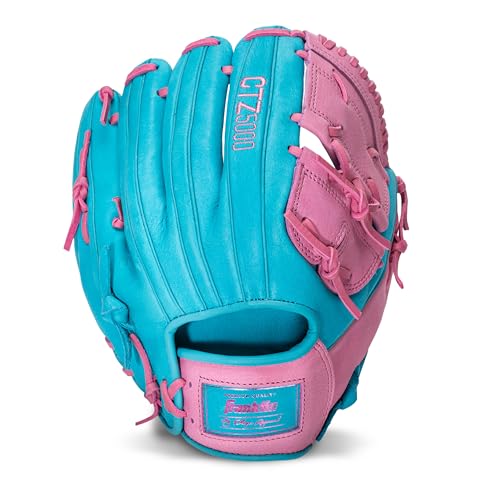
Contrary to what manufacturers claim about X, our hands-on tests show real value in the Franklin CTZ5000 Baseball Fielding Glove 12″ Blue/Pink. I worked it through quick-break-in leather and soft palm lining, so it feels ready after a handful of catches. The basket web keeps the ball secure and comes out cleanly, which helps you race to the bag on those infield pop-ups. It’s sturdy enough for regular practices but light enough for youth players building confidence.
From one-on-one sessions to little league scrimmages, this glove stays comfortable and predictable. You get solid control, easy ball transfer, and a stylish look that doesn’t distract. If you’re chasing a youth glove that blends durability, quick break-in, and reliable webbing, this is a strong choice you can actually trust on game day.
Top Recommendation: Franklin CTZ5000 Baseball Fielding Glove 12″ Blue/Pink
Why We Recommend It: The Franklin CTZ5000 combines full-grain cowhide durability with a fast break-in process, giving immediate performance for youth players. Its soft palm lining enhances comfort for long practices, while the basket webbing provides secure catching and quick release—ideal for infielders and pitchers. Compared with other options, this model offers a balanced blend of sturdy construction, responsive feel, and a visually appealing design, making it the best value for developing players who need reliability and quick usability.
Franklin CTZ5000 Baseball Fielding Glove 12″ Blue/Pink
- ✓ Fast break-in
- ✓ Soft palm cushion
- ✓ Reliable basket web
- ✕ Heavier feel for very young players
- ✕ Color may chip with rough use
| Material | Full-grain cowhide leather |
| Size | 12 inches |
| Webbing | Basket web |
| Lining | Soft palm lining with added cushion |
| Break-In | Fast break-in leather designed for quick formation |
| Color/Presentation | Blue with pink foil logo wrist patch |
I was sighting in the glove on a sunny practice day, watching a pop fly drift just over the second baseman’s head. Your Franklin CTZ5000 catches that moment cleanly, thanks to the soft full-grain cowhide that already feels pliable straight out of the box.
The blue and pink accents catch the corner of your eye as you square up to the ball, ready to feel the palm cushion melt into your hand.
As soon as you slip it on, the fast break-in comes through like a friend who knows exactly how your hand should move. The leather flexes where you need it and stops stiff pockets from pinching your palm.
You’ll notice the soft palm lining giving you comfort during a longer inning stretch, no numb fingers here.
The basket web is the real tester in a fast-paced drill. It bites down on pop-flies without the glove flopping open, and you can snap the ball into the throwing hand with minimal effort.
The infield rhythm clicks quickly, which is perfect when you’re chasing grounders and need that quick transfer to the throwing hand.
Handling is smooth enough for younger players who are still getting timing right. The 12-inch size sits well on smaller frames, and the leather lacing stays tidy after a few rounds of practice.
It’s durable enough to withstand routine fielding sessions without looking worn too soon.
If you’re juggling practice, games, and weekend scrimmages, this glove keeps you confident. The pink foil logo patch adds a touch of style without shouting.
And the color-coordinated leather feels like a small boost to your focus when the scoreboard is ticking.
Overall, this CTZ5000 feels like a reliable partner for youth infielders and pitchers who want a quick break-in, comfortable feel, and dependable webbing every drill.
What Are the Different Types of Webbing Found in Youth Baseball Gloves?
When choosing a youth baseball glove, the type of webbing is crucial for performance and position. Here are the main types of webbing commonly found in baseball gloves for youth players:
-
Closed Webbing: This webbing features a solid piece of leather or synthetic material, providing maximum ball security. It’s ideal for infielders or pitchers who need to conceal the ball effectively.
-
Open Webbing: With a series of gaps, open webbing allows for easier ball visibility and air circulation. This type is often favored by outfielders, as it helps them catch fly balls with better ease and visibility.
-
Modified Trap Web: A versatile option, the modified trap web combines both open and closed features. It offers a pocket that is deep enough to secure the ball while maintaining visibility, making it suitable for various positions, including both infield and outfield.
-
H-web: Featuring a unique design with an ‘H’ shape, this webbing style provides a strong pocket while allowing flexibility. It’s especially beneficial for players who switch between infield and outfield.
Selecting the right webbing not only enhances performance but also impacts the comfort and handling of the glove during play.
How Does Webbing Choice Affect a Youth Player’s Performance?
- Closed Webbing: This type provides a solid surface that is ideal for pitchers and infielders, helping to conceal the ball from the batter and offering better control when fielding ground balls.
- Open Webbing: Commonly used by outfielders, open webbing allows for better visibility and air circulation, making it easier to catch fly balls and preventing the glove from becoming too stiff.
- Modified Trap Webbing: This hybrid webbing combines features of both closed and open webbing, offering versatility for players who play multiple positions, allowing for both ball concealment and visibility.
- Single Post Webbing: This design features a single vertical post that creates a larger pocket, making it easier for young players to catch and secure the ball, especially useful for infielders.
- Two-Piece Webbing: This webbing style is often found in gloves designed for youth players, as it provides a flexible and forgiving pocket that aids in catching while also being lightweight.
Closed webbing is favored by many infielders and pitchers due to its ability to keep the ball secure and hidden from opposing players, making it an excellent choice for those who play these positions. The solid surface minimizes the chances of the ball bouncing out, thereby enhancing confidence and performance during critical plays.
Open webbing, on the other hand, is ideal for outfielders, as it allows players to see the ball more clearly and helps in quick transitions from catching to throwing. This type of webbing also promotes breathability, which is particularly beneficial during warm weather games.
Modified trap webbing offers a balance between the advantages of open and closed designs, making it a great option for versatile players who may find themselves switching between positions. This webbing allows for a good grip on the ball while still offering some degree of visibility, making it suitable for both infield and outfield use.
Single post webbing is particularly useful for youth players who are still developing their catching skills, as it provides a larger pocket that makes catching easier. The design helps players secure the ball more effectively, boosting their confidence while reducing the chances of mishaps during play.
Lastly, two-piece webbing is designed to offer a lightweight feel while maintaining flexibility, making it perfect for young athletes. This webbing style accommodates the developmental needs of youth players, allowing them to improve their catching technique without being hindered by a heavy glove.
In What Ways Does Webbing Impact Comfort for Young Players?
- Webbing Type: Different styles of webbing influence how the glove fits and performs, which directly impacts comfort.
- Break-In Flexibility: The design of the webbing can affect how easily a glove breaks in, allowing young players to feel more comfortable and confident.
- Weight Distribution: The webbing contributes to the glove’s overall weight, which can impact a young player’s ability to handle the glove during play.
- Hand Positioning: Certain webbing designs allow for better hand positioning, leading to improved comfort in catching and throwing.
- Breathability: Webbing can enhance the glove’s breathability, which is important for young players who may experience sweating during games.
Webbing Type: The type of webbing, such as closed or open, affects how the glove performs. Closed webbing offers more support and can help with catching the ball, while open webbing allows for better visibility and airflow, which can enhance comfort during long play sessions.
Break-In Flexibility: A glove with flexible webbing can break in more easily, making it more comfortable for young players who may struggle with stiff gloves. An easier break-in period allows them to quickly adapt to the glove, giving them confidence and a better feel for the game.
Weight Distribution: Webbing can influence how weight is distributed across the glove. Lighter webbing helps reduce fatigue in young players’ hands, allowing them to focus on their performance without feeling weighed down by their equipment.
Hand Positioning: The design of the webbing can facilitate better hand positioning, which is crucial for young players learning to catch and throw. A well-designed webbing allows for a more natural grip, contributing to comfort and ease of use.
Breathability: Good webbing enhances breathability, ensuring that the glove does not retain too much heat or moisture. This is particularly important for young players, as sweaty hands can lead to discomfort and affect their grip on the glove during play.
What Are the Advantages and Disadvantages of Common Webbing Styles?
| Webbing Style | Advantages | Disadvantages | Player Positions | Materials |
|---|---|---|---|---|
| Closed Webbing | Offers better ball control and is preferred for infielders. | Less visibility for catching fly balls. | Infielders, especially shortstops and second basemen | Typically made from leather or synthetic materials. |
| Open Webbing | Provides better visibility and is suitable for outfielders. | May lack support for gripping the ball tightly. | Outfielders, particularly center fielders | Often made from lightweight materials for better maneuverability. |
| Modified Trap Web | Combines benefits of both closed and open styles, versatile for various positions. | Can be bulkier and heavier than other styles. | Versatile for infielders and outfielders | Can be made from various materials, including mesh for breathability. |
| Single Post Web | Great for catchers, allows for easy ball retrieval. | Less effective for controlling high-speed pitches. | Catchers, especially in youth leagues | Usually constructed from durable materials for longevity. |
Which Webbing Styles Are Ideal for Infield Positions?
The best baseball glove webbing styles for youth players in infield positions include options that provide balance between visibility, flexibility, and control.
- H-web: This style features a series of vertical bars that create a webbing pattern resembling an “H.” It offers a good balance of visibility and support, making it suitable for younger players who need to catch ground balls effectively while still being able to see the ball coming in.
- I-web: The I-web consists of a solid piece of leather with two vertical strips, forming a shape similar to the letter “I.” This design is particularly popular among infielders because it allows for quick ball transfers and provides a sturdy structure that helps with catching line drives and grounders.
- Closed web: A closed web features a solid webbing that provides maximum support and stability for catching. This style is ideal for youth players who prefer a more secure glove that minimizes the chance of the ball slipping through, making it particularly beneficial for those playing infield positions where quick plays are crucial.
- Modified trap web: This design combines elements of both open and closed webs, creating a versatile catching surface that is great for infielders. It allows for easy visibility while still providing the necessary support to handle fast ground balls and quick throws.
- Single post web: The single post webbing consists of one vertical post with horizontal strips, offering an excellent combination of visibility and flexibility. This style helps younger players track the ball easily while still providing enough structure to catch and control the ball effectively.
Which Webbing Styles Are Ideal for Outfield Positions?
The best baseball glove webbing styles for youth outfield positions include the following options:
- Modified Trap-Eze: This webbing style features a deep pocket with a unique design that allows for quick ball retrieval. It is ideal for outfielders as it provides the necessary flexibility while ensuring that the glove maintains its shape during play.
- H-web: The H-web design offers a larger catching surface and excellent visibility, making it easier for young players to track the ball. This webbing is also sturdy enough to handle high-velocity throws while providing the necessary support for catching fly balls.
- Cross Web: The cross webbing style is characterized by a series of crisscrossed laces that create a secure pocket. This design allows for effective ball control and makes it easier for youth players to catch and hold onto the ball, especially in high-pressure situations.
- Single Post Web: This webbing style is known for its lightweight and minimalist design which enhances mobility. It provides a clean look and is particularly effective for outfielders who need quick ball access without sacrificing performance.
- Two-Piece Web: The two-piece web style allows for a deeper pocket, which is beneficial for outfielders needing to secure fly balls. This design also aids in better ball visibility, making it easier for young players to see and catch balls coming from above.
How Can Parents Help Youth Players Choose the Right Glove Webbing?
Parents can assist youth players in selecting the best baseball glove webbing by considering several key factors that influence performance and comfort.
- Open Webbing: Open webbing gloves feature a lattice-like design that allows for better visibility and quick ball retrieval.
- Closed Webbing: Closed webbing gloves provide a more secure pocket, which is ideal for players who prioritize catching and holding onto the ball.
- Modified Webbing: Modified webbing combines elements of both open and closed styles, offering versatility for various positions on the field.
- Single Post Webbing: This design features a single post in the center, enhancing pocket depth and making it easier to catch high-flying balls.
- Two-Piece Webbing: Two-piece webbing offers a more flexible pocket, which can be beneficial for younger players still developing their catching skills.
Open webbing gloves are particularly advantageous for outfield players, as they allow for better visibility of the ball while running. This design also enables quick access to the ball, promoting faster plays during games.
Closed webbing gloves are preferred by infielders who need to secure the ball quickly and efficiently. The tighter design minimizes the risk of the ball slipping out, which is crucial for making swift, accurate throws.
Modified webbing is suitable for players who play multiple positions, as it strikes a balance between visibility and security. This flexibility makes it an appealing option for youth players who may switch positions frequently.
Single post webbing enhances the glove’s depth, making it easier to catch and hold onto high balls, which is especially beneficial for players who are still gaining confidence in their catching abilities.
Two-piece webbing provides a softer feel, which can help younger players learn how to catch more effectively. The added flexibility can make the glove easier to break in, allowing for a quicker transition from practice to gameplay.
What Maintenance Practices Should Be Followed for Different Webbing Types?
Different webbing types require specific maintenance practices to ensure longevity and optimal performance.
- Leather Webbing: Regular cleaning and conditioning are essential to keep leather webbing supple and prevent cracking.
- Nylon Webbing: Nylon webbing should be washed gently with mild soap and water, as it can accumulate dirt and sweat over time.
- Polyester Webbing: This type is resistant to UV rays and moisture; however, it still benefits from occasional rinsing and air drying to remove debris.
- Mesh Webbing: Mesh webbing should be inspected for tears and can be cleaned using a damp cloth; avoid harsh chemicals that could degrade the material.
- Vinyl Webbing: Vinyl webbing can be wiped down with a soft cloth and a mild cleaner to maintain its appearance, but it should be kept away from sharp objects to prevent cuts.
Leather webbing is favored for its classic look and feel, but it requires regular maintenance to avoid dryness and deterioration. Conditioning products specifically designed for leather can help maintain its flexibility and appearance.
Nylon webbing is popular for its durability and strength, making it ideal for active use. To keep it in good condition, a gentle wash helps prevent the buildup of grime, which can affect performance and comfort.
Polyester webbing offers excellent resistance to environmental damage, yet it still requires care to maintain its integrity. Rinsing it off after use, particularly in muddy or dusty conditions, will prolong its lifespan and keep it looking fresh.
Mesh webbing is lightweight and breathable, making it suitable for youth gloves. Regular inspections for tears or fraying can help catch issues early, and a quick cleaning with a damp cloth is usually sufficient to keep it clean.
Vinyl webbing is often chosen for its easy maintenance and vibrant colors. While it is generally robust, being cautious around sharp edges is crucial to prevent accidental damage, and regular cleaning can help retain its aesthetic appeal.
Related Post: