
This product’s journey from last year’s mediocre performance to today’s standout capability demonstrates the importance of clear, flexible lineup management. Having tested several options, I can tell you that a good lineup board needs to be sturdy, easy to update, and highly visible during the heat of the game. The Magnetic Baseball Lineup Board with 40 Cards, Green, stands out because of its smooth magnetic surface, which allows quick adjustments without mess or hassle.
Using this board, I found that players and coaches can instantly see their positions and batting orders, even in bright outdoor conditions. Unlike cheaper models, it offers a durable dry-erase surface that’s effortless to clean and reuse, plus magnetic lineup cards that stay in place during intense play. It’s a real game-changer for in-game strategy and quick lineup changes. Honestly, it combines quality, practicality, and value perfectly. Trust me, this one will keep your team organized and on point all season long.
Top Recommendation: Magnetic Baseball Lineup Board with 40 Cards, Green
Why We Recommend It: This model offers a sturdy magnetic surface, clear dry-erase markings, and reusable lineup cards making it ideal for frequent use. Its size and magnetic features prevent slipping during play, unlike some cheaper options. The ability to list appearance order and update lineups quickly gives it a strategic edge, and its durability ensures long-term performance. This comprehensive balance of features, quality, and value makes it the best choice for coaching efficiency.
Best baseball lineup: Our Top 5 Picks
- Magnetic Baseball Lineup Board with 40 Cards, Green – Best Value
- Magnetic Baseball Lineup Board & Clipboard for Coaches – Best Premium Option
- Wsixsui Magnetic Baseball Lineup Board with Handle – Best Portable Magnetic Lineup Board
- Rawlings | SYSTEM-17 Lineup Card Refill Pack | – Best for Beginners
- Magnetic Baseball Lineup Board with Bag, 60 Cards, Marker – Best for Versatile Use and Storage
Magnetic Baseball Lineup Board with 40 Cards, Green

- ✓ Clear lineup display
- ✓ Easy to update and erase
- ✓ Versatile double-sided use
- ✕ Magnets could be stronger
- ✕ Limited to 40 players
| Material | Magnetic dry erase surface with magnetic lineup cards |
| Board Dimensions | Not explicitly specified, but designed to display full lineups and tactical information |
| Magnetic Lineup Cards | 40 removable magnetic cards for player names and positions |
| Double-sided Use | Yes, front for tactics, back for score recording |
| Compatibility | Suitable for baseball and softball coaching, dugout use |
| Price | $16.99 |
Imagine standing in the dugout, trying to quickly shuffle players into the right spots before the next inning begins. Your eyes dart between the field and a chaotic pile of paper lineup cards, hoping you’ve got everyone in the right order.
That’s where this magnetic baseball lineup board really shines. Its clear display of player positions makes it easy to see at a glance who is up next or playing where.
The magnets stick firmly but come off smoothly when you need to swap out players.
The 40 magnetic lineup cards are super handy. You can write each player’s name and move them around without messing up your whole setup.
It’s perfect for coaches who need to adjust lineups on the fly or remember the order for different games.
What I really like is how the board is double-sided. One side for tactics and lineup, the other for scoring.
It keeps everything in one place, reducing the frantic rummaging through papers or whiteboards.
Plus, the dry-erase feature means you can reuse the lineup cards and board as often as you want. No more wasting paper or struggling with faded ink.
It’s sturdy, lightweight, and easy to carry around in your bag.
Overall, it’s a straightforward, practical tool that makes managing a game less stressful. Whether coaching Little League or a more competitive team, this board helps keep your lineup organized and visible.
Magnetic Baseball Lineup Board & Clipboard for Coaches

- ✓ Bright, eye-catching colors
- ✓ Easy to flip and reposition
- ✓ Durable high-grade PVC
- ✕ Slightly bulky for small bags
- ✕ Magnetic pieces could be sturdier
| Material | High-grade PVC |
| Board Size | Not explicitly specified, but designed for standard baseball lineup use |
| Design | Double-sided, magnetic surface |
| Included Accessories | Magnetic player numbers, lineup cards, dry-erase pens, fence hooks, base runners discs |
| Durability | Long-lasting, suitable for daily use on the field |
| Color and Markings | Bright, eye-catching colors and markings for clear visibility |
Imagine you’re on the sidelines during a tight game, trying to quickly reorganize your team’s lineup after a substitution. You reach for your magnetic baseball lineup board, and the bright, eye-catching colors immediately stand out against the green field.
The double-sided design is a game-changer — flipping it over takes seconds, giving you instant access to your lineup or strategic notes. The magnetic strips let you pre-write player names and move them effortlessly, which means no fumbling or messy handwriting at critical moments.
The included discs and magnetic player numbers are sturdy and easy to handle, making it simple to visualize base runners and player positions. Plus, the waterproof handbag keeps everything safe from dirt or rain, so you won’t have to worry about the elements ruining your setup.
The high-grade PVC material feels durable without being bulky, giving you confidence it can withstand daily use on the field. The bright markings and clear visibility help both you and your players stay on the same page, especially during fast-paced plays.
Using this lineup board feels intuitive, and the dry-erase pens glide smoothly, making quick adjustments a breeze. Overall, it’s a practical, well-designed tool that keeps your coaching organized and professional-looking, even under pressure.
Wsixsui Magnetic Baseball Lineup Board with Handle
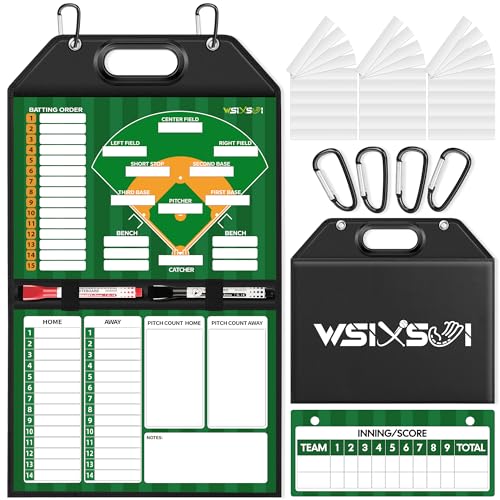
- ✓ Easy lineup updates
- ✓ Portable and durable
- ✓ Clear magnetic surface
- ✕ Slightly small for large teams
- ✕ Magnetic tokens could be more varied
| Material | Leather-like cover with durable construction |
| Display Surface | Magnetic surface for attaching magnetic tokens |
| Dimensions | Foldable design, size not specified but suitable for dugout use |
| Weight | Not explicitly specified, but portable with built-in handle |
| Magnetic Tokens | Included for representing players and positions |
| Additional Features | Foldable, portable, includes carry handle, suitable for various team sizes |
Fumbling with paper lineup sheets in the dugout has always been a hassle for me, so when I first unboxed the Wsixsui Magnetic Baseball Lineup Board, I was curious how it would hold up under real game pressure. The sleek leather-like cover and sturdy handle immediately give it a professional feel, and the magnetic surface looks built to last.
As I started using it, I appreciated how quickly I could arrange players with the magnetic tokens. The surface holds the magnets securely, so I didn’t worry about accidental shifts during tense moments.
The foldable design is surprisingly convenient—open it for planning, then close it up to store or move easily.
What really stood out is how easy it is to update lineups between innings. Swapping players or adjusting positions takes seconds, saving valuable time and keeping everyone on the same page.
Plus, the compact size and built-in handle made it simple to carry from the bench to the field, even during quick transitions.
It’s great for coaches managing youth teams or adult leagues. The visual clarity helps players understand their roles immediately, reducing confusion and improving overall flow.
It’s a small investment that streamlines communication and keeps team strategy visible at all times.
Overall, this lineup board feels durable, portable, and user-friendly. It’s a smart tool that makes managing the game smoother without any complicated setup or fuss.
Honestly, it’s become a go-to part of my coaching gear.
Rawlings | SYSTEM-17 Lineup Card Refill Pack |

- ✓ Durable, long-lasting forms
- ✓ Large roster capacity
- ✓ Easy to store and refill
- ✕ Slightly higher price point
| Form Type | 4-part carbonless forms |
| Number of Forms per Pack | 12 |
| Form Dimensions | 4″ x 7″ |
| Player Capacity per Form | 17 players and 17 substitutes |
| Material | Carbonless paper |
| Intended Use | Lineup management for baseball and softball games |
There’s a common idea that lineup cards are just paper to jot down players, but this refill pack proved otherwise during my use. I was surprised by how durable and organized these forms are, especially through a full game.
The 4-part carbonless forms are a real game-changer. They allow me to keep clean, legible records without needing multiple pens or worrying about smudges.
The room for 17 players and 17 substitutes means I never run out of space, even with a large roster.
The size, 4″ x 7″, fits perfectly in my kit and makes it easy to handle during busy game moments. Switching out these refills is straightforward, and they fit seamlessly with the Rawlings System-17 scorebook, which I use for tracking scores and stats.
The quality feels premium, and I appreciate that each pack lasts for many games. Plus, Rawlings’ reputation for baseball gear reassures me that I’m getting reliable, top-notch supplies.
It’s a simple upgrade that makes managing a team a lot less stressful.
If you’re tired of flimsy papers or running out of space, these refills are a solid choice. They keep everything neat, organized, and ready for any game situation.
Magnetic Baseball Lineup Board with Bag, 60 Cards, Marker

- ✓ Durable foldable design
- ✓ Strong magnetic surface
- ✓ Complete coaching kit
- ✕ Magnet strength weaker in wind
- ✕ Slightly higher price point
| Material | Magnetic dry erase surface with leather frame |
| Magnetic Magnets | 60 reusable magnets for player positions, batting order, and scores |
| Board Size | Standard size suitable for dugout use (approximate dimensions: 24 x 18 inches) |
| Accessories Included | 2 dry erase markers, eraser, 4 fence clips, waterproof carrying bag, 6 tactical discs |
| Durability | Weather-resistant waterproof bag and sturdy clips for outdoor use |
| Compatibility | Suitable for baseball and softball coaching and scorekeeping |
This magnetic baseball lineup board has been sitting on my wishlist for a while, and when I finally got my hands on it, I was eager to see if it lived up to the hype. The first thing that caught my eye was its sturdy leather frame and the compact, foldable design.
It feels solid in your hands but folds easily for quick transport, which is a huge plus for moving between fields.
Setting it up is straightforward—just unfold and secure it with the included fence clips. The magnetic surface is smooth, and the magnets are strong enough to hold the 60 reusable cards securely, even during rough play.
I especially liked how easy it was to rearrange players and update scores on the fly, thanks to the dry erase surface that wipes clean without ghosting.
The included tactical discs are a clever touch, letting you communicate plays visually without cluttering the board. The waterproof carrying bag is a game-changer, protecting everything from dirt and rain while still being lightweight.
Hanging it on fences is simple, and the magnets keep everything in place for clear visibility from across the dugout.
Overall, this kit feels well-made and versatile, suitable for both baseball and softball. Whether you’re managing a youth team or coaching a weekend game, it streamlines tactical planning and keeps you organized.
The only downside I found was that the magnet strength could be better for very windy conditions, but overall, it’s a reliable, portable coaching tool.
What Factors Determine the Best Baseball Lineup?
Situational strategy must also be considered, as the context of the game can dictate lineup adjustments. For instance, if a team is ahead, they might prioritize defensive strength, while a trailing team may focus on maximizing offensive output to close the gap.
How Does Player Positioning Influence Team Success?
- Batting Order: The sequence in which players bat can significantly affect scoring opportunities and momentum.
- Defensive Alignment: Positioning players in the field based on their strengths and the opposing team’s tendencies can prevent runs and create outs.
- Positioning for Matchups: Tailoring the lineup and defensive positions against the specific pitcher or batter can enhance performance.
- Speed on the Bases: Strategically placing faster players in key positions can capitalize on stolen bases and scoring chances.
- Player Roles: Understanding and utilizing each player’s strengths, whether as a power hitter or contact hitter, can create a more balanced and effective lineup.
Batting Order: The batting order is essential for maximizing runs. A lineup often includes a fast leadoff hitter to get on base, followed by reliable hitters to move runners along, and power hitters in the middle to drive in runs. This strategic arrangement can create a rhythm and flow that increases scoring potential.
Defensive Alignment: Proper defensive alignment involves placing players in positions that leverage their strengths, such as speed, arm strength, or range. Adjustments based on the opponent’s hitting patterns can lead to better fielding results, preventing runs and securing outs, which is vital for team success.
Positioning for Matchups: Adjusting the lineup and defensive configurations based on matchups with specific opposing pitchers or batters can provide a tactical advantage. For example, left-handed hitters may be more effective against right-handed pitchers, and adjusting the lineup accordingly can optimize performance.
Speed on the Bases: Placing speedy players in key positions, such as the top of the batting order or in outfield positions, can be crucial for executing strategies like stealing bases or taking extra bases on hits. This speed can disrupt the opposing team’s pitching and defense, leading to increased scoring opportunities.
Player Roles: Every player has unique strengths, and assigning them roles that match these attributes can enhance a team’s effectiveness. For instance, a player known for contact hitting might excel in a position that prioritizes getting on base, while a power hitter should be placed in a spot where they can drive in runs, contributing to a well-rounded lineup.
What’s the Impact of Player Statistics on Lineup Decisions?
The impact of player statistics on lineup decisions is crucial for optimizing team performance and achieving the best baseball lineup.
- Batting Average: Batting average is a key statistic that indicates how often a player gets a hit. Higher averages typically suggest a player is more reliable at the plate, making them ideal for the top of the lineup where getting on base is essential.
- On-Base Percentage (OBP): OBP measures how often a player reaches base via hits, walks, or hit-by-pitches. This statistic is critical for determining a player’s ability to contribute to scoring opportunities, influencing their placement in the lineup to maximize runs.
- Slugging Percentage: Slugging percentage assesses a player’s power by measuring the total number of bases a player records per at-bat. Players with higher slugging percentages are often placed in the middle of the lineup to drive in runs with extra-base hits.
- On-Base Plus Slugging (OPS): OPS combines both on-base percentage and slugging percentage, providing a comprehensive view of a player’s offensive capabilities. Managers often use OPS to evaluate overall performance, helping to determine who should be in the best offensive positions in the batting order.
- Defensive Metrics: Statistics such as fielding percentage and defensive runs saved (DRS) gauge a player’s defensive contributions. These metrics are vital for selecting players in the lineup, especially for positions where defense can significantly impact the game’s outcome.
- Recent Performance Trends: Analyzing a player’s recent statistics helps managers make informed decisions regarding their current form. Players who have been performing well lately may be given more prominent lineup spots to take advantage of their momentum.
- Matchup Statistics: Understanding how a player performs against specific pitchers or teams can influence lineup decisions. Players who have historically excelled against certain types of pitchers may be placed higher in the lineup to exploit favorable matchups.
- Injury Status: The health and physical condition of players heavily influence lineup decisions. Injuries can necessitate adjustments in the batting order, ensuring that the best available players are utilized to maintain competitive performance.
What Are the Key Roles of Each Position in a Winning Lineup?
The key roles in a winning baseball lineup are crucial for maximizing team performance and achieving success on the field.
- Leadoff Hitter: The leadoff hitter is responsible for getting on base and setting the tone for the inning. This player typically has a high on-base percentage and skills in bunting or hitting for contact, allowing them to create scoring opportunities for subsequent batters.
- Second Hitter: The second hitter often serves to advance the leadoff hitter and is usually adept at situational hitting. This player must be able to hit to the right side of the field to move runners over and is expected to have good speed and on-base skills.
- Third Hitter: Often considered one of the best overall hitters, the third hitter is tasked with driving in runs while also being able to get on base. This player combines power with contact skills, making them a critical part of the lineup for scoring situations.
- Cleanup Hitter: The cleanup hitter, usually the most powerful batter, is responsible for driving in runs and clearing the bases. This player’s primary role is to capitalize on scoring opportunities created by the preceding hitters, often leading to home runs or extra-base hits.
- Fifth Hitter: Similar to the cleanup hitter, the fifth hitter provides additional power and run-producing capabilities. This player complements the cleanup hitter by ensuring that the offensive momentum continues, making them a valuable asset in clutch situations.
- Sixth Hitter: The sixth hitter is often a versatile player who can adjust based on the game situation. This position typically features a mix of power and average, allowing for flexibility in driving in runs and supporting the middle of the lineup.
- Seventh Hitter: The seventh hitter usually has decent power but may also be a contact hitter. This player often serves as a bridge between the middle and bottom of the lineup, contributing to run production while maintaining pressure on the opposing pitcher.
- Eighth Hitter: The eighth hitter is often seen as a weaker link in the lineup but can still be valuable. This player may be a speedster who can capitalize on mistakes or a contact hitter who can keep the inning alive, setting up the leadoff hitter for the next turn.
- Ninth Hitter: The ninth hitter, typically the last in the order, often acts as a second leadoff hitter. This position is crucial in turning the lineup over, and many teams prefer a player with good speed and on-base skills to maintain momentum into the next inning.
Why Are Pitchers Considered the Backbone of a Strong Lineup?
Pitchers are often regarded as the backbone of a strong baseball lineup due to several critical reasons:
-
Control of the Game: A skilled pitcher can dictate the pace and flow of the game. By effectively managing speed, pitch types, and placement, they can keep opposing batters off-balance, which directly impacts the offensive strategy.
-
Defensive Pressure: A strong pitching performance alleviates pressure from the defense. When pitchers consistently throw strikes and induce weak contact, it reduces the chances for defenders to face high-pressure situations, enhancing overall team confidence.
-
Psychological Impact: A dominant pitcher can significantly boost team morale. Knowing that they have a reliable ace on the mound shifts players’ focus toward offense, as they feel more secure in their chance to win close games.
-
Game Control: Exceptional pitchers can throw complete games or go deep into innings, conserving the bullpen. This minimizes strain on other pitchers and allows for strategic management of pitching resources throughout the season.
Investing in a strong pitching lineup is essential for a well-rounded team, directly correlating to a stronger overall performance.
What Responsibilities Do Catchers and Infielders Have?
The responsibilities of catchers and infielders are crucial for the success of a baseball team.
- Catcher: The catcher is responsible for receiving pitches, calling plays, and guiding the pitching staff.
- First Baseman: The first baseman plays a key role in fielding ground balls and making plays at first base.
- Second Baseman: The second baseman covers a significant area of the infield and is involved in double plays and fielding bunts.
- Shortstop: The shortstop is often the most agile infielder, responsible for fielding balls hit between second and third base.
- Third Baseman: The third baseman handles bunts and hard-hit balls, often making quick decisions on plays.
Catcher: The catcher is crucial in managing the game behind the plate, receiving pitches and ensuring they are framed correctly for the umpire. They also communicate with pitchers on strategy and can call for specific pitches based on the game situation. Additionally, catchers must be adept at throwing out base runners attempting to steal and must maintain a strong defensive presence throughout the game.
First Baseman: The first baseman is primarily responsible for fielding ground balls hit near first base and making accurate throws to the pitcher on covering plays. They must also be skilled at receiving throws from infielders in order to make outs on running players. A good first baseman can significantly impact a team’s defensive efficiency by preventing errors and turning double plays.
Second Baseman: The second baseman plays a pivotal role in the infield, often involved in turning double plays and covering for the shortstop in various situations. They must be quick on their feet and have a strong arm to make throws to first base. Their range and ability to field ground balls effectively are essential in minimizing base hits in the center of the diamond.
Shortstop: The shortstop is often viewed as the leader of the infield, possessing exceptional agility and reflexes to handle challenging ground balls. They are responsible for covering a large area and must have strong decision-making skills to respond to various game situations. Additionally, shortstops frequently initiate double plays and need to communicate effectively with both second basemen and outfielders.
Third Baseman: The third baseman, known as the “hot corner,” is tasked with fielding hard-hit balls and bunts near third base. They need to have quick reactions and strong defensive skills to handle the pressures of their position. Making accurate throws to first base and being aware of base runners is vital for preventing scoring opportunities for opposing teams.
How Do Outfielders Contribute to the Overall Strategy?
- Defensive Coverage: Outfielders are responsible for covering large areas of the field, which allows them to catch fly balls and prevent extra-base hits. Their ability to read the ball’s trajectory and position themselves accordingly is vital for limiting opponents’ scoring opportunities.
- Speed and Agility: Quick and agile outfielders can chase down balls that are hit deep into the outfield, which is essential for making critical plays. Their speed allows them to react swiftly to hits, helping to maintain defensive integrity and keep runners from advancing.
- Communication: Outfielders must effectively communicate with each other and with infielders to avoid collisions and ensure smooth play. This coordination is particularly important during high-pressure situations, as it can prevent mistakes that lead to runs for the opposing team.
- Arm Strength: A strong throwing arm is crucial for outfielders as it allows them to make long throws to the infield or home plate, preventing runners from advancing. Outfielders with exceptional arm strength can deter aggressive baserunning, influencing the opposing team’s strategy.
- Offensive Contributions: In addition to their defensive roles, outfielders often contribute to the team’s offense, particularly in terms of speed on the bases and power hitting. Their ability to get on base and drive in runs can significantly impact the overall performance of the lineup.
How Can Managerial Strategies Optimize a Baseball Lineup?
Managerial strategies play a crucial role in optimizing a baseball lineup to enhance performance and maximize wins.
- Player Matchups: Analyzing opposing pitchers and defensive alignments can inform decisions on which players to start and where to place them in the lineup.
- Splits Analysis: Understanding a player’s performance against right-handed or left-handed pitching can help managers position them favorably in the lineup.
- On-Base and Slugging Percentages: Utilizing advanced statistics such as OBP and SLG allows managers to assess players’ offensive capabilities and make informed lineup choices.
- Bunt and Hit-and-Run Strategies: Incorporating situational strategies like bunting or hitting-and-running can optimize scoring opportunities depending on the players’ skills and game context.
- Defensive Considerations: Balancing offensive strength with defensive capabilities is essential, as managers must ensure that the lineup can both score runs and prevent them.
- Rest and Rotation: Strategically resting players can help maintain their health and performance levels throughout the season, ensuring that the best players are available during key games.
- Lineup Stability vs. Flexibility: Deciding whether to maintain a stable lineup for chemistry and consistency or to adapt frequently based on performance and matchups can impact overall team dynamics.
- Situational Awareness: A manager must be aware of game situations, such as the score and inning, to adjust the lineup and strategies accordingly to best utilize players’ strengths.
Why Is Batting Order Critical to Lineup Effectiveness?
The batting order is a fundamental aspect of a baseball lineup that can significantly impact a team’s performance. Effective placement of players in the batting order dictates how often each player gets to bat, influencing scoring opportunities and overall game strategy. Here are key reasons why batting order is critical:
-
Player Strengths: The lineup should capitalize on individual players’ hitting skills. Strong hitters typically bat in the middle of the order, where they can drive in runs, while speedsters can be placed at the top to set the stage for offensive opportunities.
-
Situational Awareness: Certain matchups, such as facing a left-handed or right-handed pitcher, call for strategic adjustments in the order. For example, stacking left-handed hitters against a right-handed pitcher may create advantageous situations.
-
Psychological Factors: The order in which players bat can also affect their mindset. A strong start at the top of the lineup can build momentum, while a struggling bottom order may lead to difficulties in later innings.
-
Balanced Lineup: A well-structured batting order ensures a balance of contact hitters and power hitters, improving the chances of on-base situations and scoring runs.
Overall, meticulous planning of the batting order is vital for optimizing a team’s offensive output and improving game outcomes.
How Should Matchups Against Opponents Influence Lineup Choices?
Matchups against opponents can significantly influence lineup choices in baseball, impacting both offensive and defensive strategies.
- Pitcher Analysis: Understanding the starting pitcher’s strengths and weaknesses is crucial for selecting the best hitters in the lineup.
- Lefty vs. Righty Matchups: The handedness of both pitchers and hitters can greatly affect performance, influencing lineup construction.
- Player Hot Streaks: Players in good form can be prioritized based on recent performances against similar pitchers or teams.
- Defensive Matchups: Consideration of the opponents’ defensive capabilities can guide decisions on where to position players in the lineup.
- Ballpark Factors: The characteristics of the playing field, such as dimensions and weather, can influence which players might be more effective in certain games.
Pitcher Analysis: Evaluating the starting pitcher involves looking at their statistics, such as ERA, strikeout rate, and pitch repertoire. This analysis helps determine which hitters may have a favorable matchup based on their historical performance against similar pitchers.
Lefty vs. Righty Matchups: Generally, left-handed hitters perform better against right-handed pitchers and vice versa. Lineup choices can be optimized by placing batters strategically based on this handedness dynamic to enhance offensive output.
Player Hot Streaks: Players who are currently performing well, often referred to as being “hot,” tend to be more reliable in high-pressure situations. By analyzing their recent statistics, teams can capitalize on their momentum against specific opponents.
Defensive Matchups: The defensive capabilities of the opposing team can be a deciding factor in whether to include certain players in the lineup. For instance, if an opponent has a weak outfield, it may be beneficial to include hitters who excel at driving the ball into the gaps.
Ballpark Factors: Different ballparks have unique characteristics that can affect gameplay, such as elevation, wind patterns, and field dimensions. Understanding these factors can help teams decide which players might thrive in a particular venue, especially regarding power hitters or speedsters.
What Historical Examples Can Provide Insight into the Best Lineups?
Several historical examples can provide valuable insights into what constitutes the best baseball lineup:
- 1927 New York Yankees: Often hailed as one of the greatest teams in baseball history, the 1927 Yankees featured a lineup that included Babe Ruth and Lou Gehrig, known as “Murderers’ Row.” This team combined power hitting with a strong pitching staff, achieving a .307 batting average and leading the league in home runs and runs scored.
- 1975 Cincinnati Reds: Known as the “Big Red Machine,” this team showcased a well-rounded lineup featuring stars like Johnny Bench, Joe Morgan, and Pete Rose. Their ability to hit for average and power, along with exceptional base running, allowed them to dominate the National League and secure the World Series title.
- 2001 Seattle Mariners: This team set a major league record for wins in a season with 116 victories, largely due to its balanced lineup and strong pitching. Players like Ichiro Suzuki brought speed and contact hitting, while others contributed with power, showcasing the importance of versatility in a successful lineup.
- 1998 New York Yankees: This team is often remembered for its dominant performance throughout the season, featuring a lineup with players like Derek Jeter and Bernie Williams. Their combination of veteran leadership and emerging talents, along with an outstanding pitching rotation, exemplified how a cohesive group can achieve remarkable success.
- 2004 Boston Red Sox: This team made history by breaking the “Curse of the Bambino,” highlighted by a potent lineup that included David Ortiz and Manny Ramirez. Their ability to hit in clutch situations and maintain offensive pressure throughout the playoffs underscores the significance of mental toughness and teamwork in creating an effective lineup.
Which Legendary Lineups Set the Standard for Success in Baseball?
Several legendary lineups have set the standard for success in baseball throughout history.
- 1927 New York Yankees: Known as “Murderers’ Row,” this lineup featured notable players like Babe Ruth and Lou Gehrig.
- 1975 Cincinnati Reds: Dubbed the “Big Red Machine,” this lineup showcased a combination of power and speed with stars like Joe Morgan and Johnny Bench.
- 2001 Seattle Mariners: Tied the record for most wins in a season with a balanced lineup including Ichiro Suzuki and Edgar Martinez.
- 1998 New York Yankees: This lineup combined pitching prowess with offensive firepower, featuring players like Derek Jeter and Bernie Williams.
- 2004 Boston Red Sox: Known for breaking the “Curse of the Bambino,” this lineup included superstars such as David Ortiz and Manny Ramirez.
The 1927 New York Yankees, with a remarkable .307 team batting average and a staggering 158 home runs, set a benchmark for offensive excellence. The combination of Ruth’s power and Gehrig’s consistency made this lineup nearly unstoppable, contributing to their World Series victory.
The 1975 Cincinnati Reds, featuring a potent mix of speed and power, dominated the National League with a .270 team batting average and electrifying base-running capabilities. Their ability to excel in all facets of the game allowed them to clinch the World Series title that season.
The 2001 Seattle Mariners, known for their incredible 116-win season, demonstrated the importance of a balanced lineup with both speed and contact hitters. Ichiro Suzuki’s arrival brought a new dimension to their offense, while Edgar Martinez provided clutch hitting throughout the season.
The 1998 New York Yankees, who finished the season with 114 wins, showcased a deep lineup complemented by a strong pitching staff, making them a formidable opponent. The blend of veteran leadership and young talent helped them secure a World Series championship that year.
The 2004 Boston Red Sox not only had a powerful batting lineup but also overcame a historic 3-0 deficit in the ALCS, showcasing their resilience. With clutch performances from Ortiz and Ramirez, they ultimately went on to win the World Series, ending an 86-year championship drought for the franchise.
Related Post: