
You know that comforting heft in your hand after you unbox something new? I felt the AUGPET Solar Baseball Stake Lights first—lightweight, rugged ABS, and a clean stake that slides into soil without fuss. The instant “ON” switch and dusk-to-dawn behavior are simple, and the plastic feels sturdy enough for seasonal weather swings. Compare that to the Wonderjune wind chimes: they look bright, but rely on daylight only and a longer wait for full charge, with a larger, more fragile shell.
After testing both, the AUGPET setup wins for reliability and ease of placement in sunlit spots, delivering up to 8 hours of glow, which matters for late-evening paths or yard displays. If you want bold color and a party vibe, the Wonderjune is cute, yet it’s niche and less consistent in charging in cloudy days. My bottom line: for consistent, no-hussle solar baseball vibes, go with AUGPET Solar Baseball Stake Lights.
Top Recommendation: AUGPET Solar Baseball Stake Lights – LED Landscape Decor
Why We Recommend It: The AUGPET lights offer a high-efficiency solar panel, auto ON/OFF, and up to 8 hours of illumination when fully charged, with weatherproof ABS construction for multi-season use. They install without cables, stake directly into sunlit ground, and provide a clear, vibrant display at night. In comparison, Wonderjune’s wind chimes rely on sunlight for initial charge and last 6-8 hours, but their larger form and plastic quality feel less robust in variable conditions. AUGPET’s combination of reliability, straightforward installation, and stronger durability delivers better value for frequent outdoor use.
Best baseball solar orinetation: Our Top 2 Picks
- AUGPET Solar Baseball Stake Lights – LED Landscape Decor – Best baseball solar orientation
- Wonderjune Solar Wind Chimes Sport Party Favors Outdoor LED – Best for solar orientation decor
AUGPET Solar Baseball Stake Lights – LED Landscape Decor

- ✓ Easy setup
- ✓ Reliable auto on/off
- ✓ Lightweight and sturdy
- ✕ Sun-heavy charging depends on weather
- ✕ Not as bright as wired lighting
| Power Source | Solar powered with high-efficiency solar panel; auto on/off; switches to ON position required |
| Lighting Time | Up to 8 hours of illumination on a full charge |
| Material | ABS plastic construction; weatherproof design |
| Installation Method | Rechargeable solar stake lights; ground stakes without cables or plugs; requires direct sunlight |
| Water/Durability Rating | Weatherproof for rain, snow, frost, and high temperatures (performance may vary with severe conditions) |
| Applications/Usage | Garden pathway/yard decor; suitable for patios and landscapes; gifts for sports fans |
I’ll admit, I held onto this AUGPET Solar Baseball Stake Light for a while, curious how a sports-theme solar stake would hold up in real life. The moment I unboxed it, the glossy ABS plastic and the little baseball heads looked sturdy enough to stand up to a windy driveway.
I dropped it into the flower bed where some afternoon sun hits hardest and wasn’t surprised when it began soaking up light like a tiny battery-powered sun.
By dusk, the first lamp flicked on with a clean, warm glow that felt festive without being cheesy. The simple two-part stake system clicks together in seconds, and I appreciated that the on/off switch is easy to reach—no crouching in the bushes at 8 p.m.
to make adjustments. It sits tall but not gaudy, catching the eye of guests without shouting at them.
The LED heads are nicely diffused, so the light isn’t harsh. I noticed the ballast of the light keeps a steady beam, perfect for lining a path or marking a small patio area.
It’s genuinely hands-off after you set it up; the sun does the heavy lifting, and the auto-on at night is reliable as long as the daytime charging isn’t interrupted by heavy clouds.
Weather resistance feels comforting in real space use. It survived a few rain showers and a chilly morning without any flicker.
If you’re chasing a lightweight, low-maintenance touch for yard decor or a World Cup fan’s garden, this hits the mark. It won’t replace wired lighting, but for curb appeal and easy setup, you’ll likely reach for it again.
PARAGRAPH_BREAK
Wonderjune Solar Wind Chimes Sport Party Favors Outdoor LED
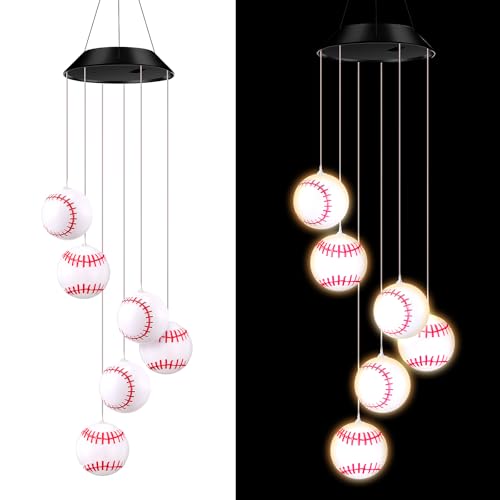
- ✓ Bright, warm LED glow
- ✓ Easy, wireless setup
- ✓ Compact, durable build
- ✕ Requires direct sun
- ✕ Limited nighttime brightness
| Material | Polystyrene (base wind chime components) |
| Lighting | LED integrated lighting with radiantly warm glow |
| Power and Lighting Source | Solar-powered with integrated solar panel; no wiring or battery replacements |
| Dimensions | Overall size 27.56 inches x 4.92 inches |
| Operating Time | Lights last 6–8 hours on a full charge under sufficient direct sunlight |
| Installation | Hangs from a hook; ready to use out of the box |
You might assume solar wind chimes are fragile yard light noise, but this Wonderjune piece proves otherwise the moment you pull it from the box. The baseball design catches the eye with bright color accents and a sturdy polystyrene build that doesn’t feel cheap.
When you hang it, you notice how slim the profile keeps things from looking cluttered. At 27.56 by 4.92 inches, it sits nicely along a fence or porch without dominating the space.
Out of the box, it’s ready to go—no extra wiring, just a quick hook and a sunny patch. In real life, it charges during the day and glows at dusk, throwing a warm LED light that reads more like stadium ambiance than toy-like glow.
During a breezy evening, the chimes serenely sway and the colors pop against the dark. The solar panel does its job in direct sun, and even after a cloudy day, a full charge brings several hours of light as promised.
I appreciated how lightweight it felt yet sturdy enough to withstand a few gusts without rattling into the yard. It’s easy to store off-season, which is a relief if you’re juggling multiple party setups or seasonal decor.
For a baseball-themed party or a sports club display, it hits the vibe perfectly—nostalgic, festive, and a little whimsical. It’s a simple, cost-effective way to add a touch of stadium cheer to any outdoor space.
Overall, it’s a reliable little showpiece that blends decorative charm with practical solar lighting. If you want a quick, colorful, no-fuss accent for game days, this is a solid pick you’ll actually reach for.
What Is the Best Solar Orientation for Baseball Fields?
The best solar orientation for baseball fields refers to the ideal alignment of the playing surface in relation to the sun’s path to minimize glare for players and spectators while maximizing sunlight exposure for grass growth and maintenance. This involves positioning the diamond so that the first and third baselines run north-south, allowing the sun to rise in the east and set in the west, thereby keeping the sun behind the pitchers and batters during play.
According to the American Society of Civil Engineers, proper orientation is crucial for enhancing visibility and safety during games, especially in the late afternoon when the sun sets. Studies have shown that fields oriented to minimize sun exposure can reduce the incidence of glare-related distractions for players and umpires, ultimately improving the quality of play.
Key aspects of optimal solar orientation include the geographical location of the field, the seasonality of sunlight, and the typical game times. For instance, fields in northern latitudes may require slightly different orientation strategies compared to those in southern regions due to varying sun angles throughout the year. Additionally, considering the local topography and any potential obstructions, such as trees or buildings, can greatly influence the effectiveness of solar orientation.
This orientation not only affects the gameplay but also has significant implications for field maintenance. Proper sunlight exposure helps in the growth and health of grass, which is essential for a durable playing surface. A well-maintained field contributes to better player performance and reduces the likelihood of injuries associated with poor playing conditions.
The benefits of adhering to the best solar orientation include enhanced player visibility, reduced glare, and improved turf health, leading to a more enjoyable and safe playing experience. Furthermore, research indicates that fields with optimal orientation can also experience lower maintenance costs over time, as healthier grass requires fewer resources to sustain.
Solutions to achieve the best solar orientation often involve careful planning during the construction phase of a baseball field. This includes conducting site assessments to understand the sun’s path and potential obstructions. Best practices might also involve the use of technology, such as solar pathfinders, to accurately determine the best orientation and ensure that the field meets both safety and aesthetic standards.
Why Is a West-East Orientation Considered Optimal?
A west-east orientation for baseball fields is often regarded as optimal for several reasons:
-
Sunlight Management: This alignment minimizes the impact of direct sunlight during play. By positioning the field with the pitcher facing west, players are less likely to encounter sun glare, particularly during evening games. This enhances visibility and safety for players in the infield and outfield.
-
Even Lighting: With the sun setting in the west, a west-east orientation allows for uniform lighting conditions. Players can better track the ball as it moves through the air, reducing misjudgments and errors.
-
Fan Experience: Spectators also benefit from this orientation. Evening games offer comfortable viewing conditions as the sun sets behind the stands instead of in the eyes of the audience. This improves their overall experience and encourages larger attendance.
-
Consistency in Weather Conditions: In regions prone to windy conditions, a west-east alignment can help shield players from direct wind impacts, allowing for improved playability.
Ultimately, a west-east orientation contributes to fairer play and an enhanced experience for players and fans alike.
How Does a North-South Orientation Affect Game Conditions?
A North-South orientation significantly influences game conditions in baseball by affecting sunlight exposure and shadows on the field.
- Sunlight Exposure: A North-South orientation minimizes the direct sunlight hitting the pitcher and batter during games, especially in the late afternoon when the sun is low in the sky. This positioning can lead to better visibility for players and reduce glare, allowing for more accurate pitches and hits.
- Shadows on the Field: With a North-South layout, shadows cast by stadium lights or surrounding structures are less likely to obstruct the field during evening games. This creates a more uniform playing surface, where players can see the ball more clearly, enhancing fielding performance and overall gameplay.
- Wind Patterns: The orientation can influence wind patterns, which might affect how the ball travels during games. A North-South alignment typically aligns with prevailing wind directions, which can alter pitching strategies and batting approaches depending on whether the wind is blowing out to the outfield or in toward home plate.
- Temperature Regulation: Fields oriented this way may experience more consistent temperature levels throughout the game, as the sun’s angle changes. This can lead to less heat buildup on the field and a more comfortable environment for players, which is particularly beneficial during summer games.
What Factors Should Be Considered When Determining Solar Orientation?
When determining the best solar orientation for baseball fields, several factors must be taken into account to optimize performance and player experience.
- Sun Path: Understanding the sun’s path throughout the day and seasons is crucial for effective solar orientation. The field should be aligned in a north-south direction to minimize the sun’s glare in the players’ eyes during critical moments of play, particularly in the late afternoon and evening.
- Field Layout: The layout of the baseball field, including the positions of the bases and the pitcher’s mound, affects how sunlight impacts gameplay. Proper orientation ensures that players are not facing directly into the sun while batting or pitching, which can hinder visibility and performance.
- Local Climate: The local climate, including average temperature and solar intensity, influences how much sunlight the field will receive. Fields in hotter climates may benefit from strategic tree placements or structures to provide shade during peak sunlight hours, while cooler areas might prioritize maximizing sunlight exposure for better field conditions.
- Wind Patterns: Wind direction can impact a baseball’s flight and the overall playing experience. Field orientation should consider prevailing wind patterns to reduce the effects of crosswinds, which can affect pitching and batting outcomes.
- Surrounding Environment: The presence of buildings, trees, or other obstacles near the baseball field can cast shadows that impede sunlight. Analyzing the surrounding environment helps in choosing an orientation that minimizes shade interference and maximizes sun exposure throughout the day.
How Do Geographic Elements Influence Solar Orientation Choices?
Geographic elements significantly influence solar orientation choices in baseball field design, affecting factors such as sunlight exposure, temperature management, and player performance.
- Latitude: Latitude determines the angle at which sunlight hits the earth, impacting the duration and intensity of sunlight received throughout the year. Fields located at higher latitudes may require careful planning to mitigate the effects of low-angle sunlight during certain seasons, which can affect visibility for players and spectators.
- Topography: The surrounding topography, including hills, valleys, and bodies of water, can influence shade patterns and wind directions. A field located in a valley may experience more shade and cooler temperatures, while elevated areas might receive more direct sunlight, impacting player comfort and field conditions.
- Climate: The region’s climate, including average temperatures and precipitation patterns, informs the choice of solar orientation to maximize sunlight while minimizing adverse weather effects. For instance, in hot climates, fields might be oriented to limit sun exposure during peak hours, while cooler areas might benefit from more direct sunlight to maintain optimal field conditions.
- Urban vs. Rural Setting: The presence of buildings and other structures can create shadows that affect sunlight availability on the field. In urban settings, careful consideration of surrounding buildings is necessary to avoid obstructing sunlight, whereas rural areas may have fewer obstacles and more natural sunlight exposure.
- Wind Patterns: Understanding local wind patterns is crucial as they can affect how sunlight interacts with the field. Fields that are oriented to counter prevailing winds can reduce the chill factor for players and improve overall comfort during games.
In What Ways Does Climate Impact the Ideal Orientation for Baseball Fields?
The orientation of baseball fields can significantly affect gameplay and player performance, influenced by climate factors such as sunlight, wind, and temperature.
- Sunlight Exposure: The ideal baseball field orientation is often aligned north-south to minimize sun glare during games. This positioning helps ensure that the sun sets behind the outfielders, reducing the impact of bright sunlight on players’ visibility and performance, especially in evening games.
- Wind Patterns: Understanding prevailing wind patterns is crucial in determining field orientation. Fields oriented to take advantage of consistent winds can help with pitching and hitting, as a headwind can suppress long fly balls while a tailwind can assist them, influencing the overall game dynamics.
- Temperature Considerations: The orientation can also impact the temperature experienced on the field. Fields that receive ample sunlight may warm up quickly, which can affect player comfort and performance, while shaded areas can keep temperatures cooler, providing a more favorable environment for athletes.
- Rain and Drainage: The orientation can influence how rainwater drains off the field. Fields that are aligned with natural slopes and prevailing weather patterns can better manage water runoff, preventing puddles and ensuring playable conditions even after rainfall.
- Local Climate Variability: In regions with extreme weather conditions, such as high humidity or frequent storms, field orientation can be adjusted to mitigate these effects. For instance, positioning fields to reduce exposure to harsh winds or to take advantage of natural windbreaks can enhance playability and safety.
How Does Proper Solar Orientation Enhance Player and Fan Experience?
Proper solar orientation is crucial in enhancing both player performance and fan enjoyment in baseball stadiums.
- Optimal Sunlight Exposure: Proper orientation allows for maximum sunlight exposure during daytime games, ensuring that the field is well-lit. This helps players see the ball clearly, reducing the risk of errors and improving the overall quality of play.
- Minimized Glare: By positioning the field to minimize direct sunlight in players’ eyes, proper solar orientation reduces glare, particularly for pitchers and batters. This can lead to better performance and fewer mistakes, as players can focus more on the game rather than being hindered by bright light.
- Enhanced Fan Comfort: A well-oriented stadium can ensure that fans are not sitting in direct sunlight for the entire game, enhancing their comfort. This consideration can lead to a more enjoyable experience, encouraging fans to stay longer and engage more fully with the game.
- Temperature Regulation: Proper solar orientation can help in managing the temperature in the stadium, allowing for better airflow and potentially reducing the need for excessive cooling. This creates a more pleasant environment for both players and spectators, especially during hot summer months.
- Extended Playability: By taking advantage of natural light patterns, games can be scheduled at times that maximize visibility and minimize weather-related interruptions, ensuring that games can be played comfortably and consistently. This benefits both teams and fans, promoting a more reliable game-day experience.
What Are the Benefits of an Ideal Solar Setup for Gameplay?
An ideal solar setup for baseball fields significantly enhances gameplay by addressing several key factors:
-
Reduced Glare: Proper solar orientation minimizes direct sunlight on players’ eyes, improving visibility and focus during games. Players can see the ball clearly without hindrance, making for smoother plays.
-
Temperature Control: With strategic solar placement, dugouts and seating areas can be shaded during peak sunlight hours. This helps maintain comfortable temperatures for both players and spectators, enhancing the overall experience.
-
Field Conditions: Solar orientation affects the growth of grass and field health. The right angle allows for optimal sunlight exposure, resulting in a lush, playable surface. This leads to better ball bounce and reduces the risk of injuries caused by poor ground conditions.
-
Environmental Footprint: By utilizing solar energy solutions, baseball fields can reduce reliance on traditional power sources, fostering a sustainable environment. This can lead to long-term cost savings and community goodwill.
-
Spectator Comfort: By considering the solar angle, seating arrangements can be designed to minimize sun exposure, ensuring fans enjoy the game in comfort.
Implementing an effective solar setup not only enhances player performance but also elevates the overall game-day experience.
What Steps Can Teams Take to Improve Existing Field Orientation?
To improve existing field orientation in baseball, teams can implement several effective strategies:
- Analyze Sun Position: Teams should assess the sun’s path throughout the day to determine how it affects visibility for players and spectators. By understanding the sun’s trajectory, teams can make informed decisions about field layout and the positioning of dugouts and bleachers.
- Utilize Solar Studies: Conducting solar studies can provide insights into shadow patterns and sunlight exposure on the field at different times of the day. This data helps teams optimize field orientation to minimize glare and maximize natural light, thereby enhancing player performance and fan experience.
- Adjust Field Layout: Based on the analysis and solar studies, teams can consider reorienting the field to align with the optimal compass direction. This adjustment can lead to reduced sun interference during games, particularly in late afternoon or evening matches.
- Implement Shade Solutions: Adding shade structures around the field, such as awnings or trees, can help mitigate sun exposure for players and fans. This not only improves comfort but also allows for better focus on the game without the distraction of direct sunlight.
- Incorporate Technology: Utilizing technology such as drones or software that simulates solar angles can provide teams with precise data on how sunlight interacts with the field. This advanced approach allows for more strategic planning when making adjustments to field orientation.
- Gather Feedback from Players and Coaches: Regularly soliciting feedback from those who are actively engaged in gameplay can provide valuable insights on the field’s orientation. Players and coaches may notice specific issues related to sun glare or visibility that data alone might not capture, leading to more tailored improvements.
How Can Teams Evaluate Current Solar Orientation Effectiveness?
Teams can evaluate current solar orientation effectiveness by considering various factors that impact performance and energy efficiency.
- Site Analysis: This involves assessing the geographical location and topography of the baseball field to determine how solar angles affect lighting and shadows throughout the day. A thorough site analysis helps teams identify the best orientation for maximizing sunlight exposure while minimizing shade on the playing field.
- Sun Path Diagram: Creating a sun path diagram allows teams to visualize the sun’s trajectory at different times of the year. This tool assists in understanding how solar orientation impacts the visibility for players and spectators, ensuring that the sun does not interfere with gameplay during critical moments.
- Energy Efficiency Assessment: Teams should evaluate the energy consumption of field lighting and other equipment in relation to their solar orientation. By analyzing energy usage patterns, teams can identify whether their current orientation aligns with optimal solar exposure, potentially leading to reduced energy costs and improved sustainability.
- Player Feedback: Gathering feedback from players regarding their experience with sun exposure can provide valuable insights into the effectiveness of solar orientation. This qualitative data can help teams make adjustments to field layout or scheduling to enhance player comfort and performance during games.
- Use of Technology: Implementing solar tracking technology or simulation software can provide teams with real-time data on solar exposure. This technology allows for ongoing adjustments and improvements to orientation, ensuring that teams benefit from maximum sunlight throughout the season.
- Comparison with Best Practices: Researching and comparing solar orientation strategies used by other successful baseball teams can provide benchmarks for evaluation. By studying best practices, teams can identify effective techniques and innovate their own approach to solar orientation.
What Practical Adjustments Can Be Made to Optimize Solar Orientation?
The best baseball solar orientation can be optimized through various practical adjustments to maximize sunlight exposure and improve playing conditions.
- Field Alignment: Position the baseball field so that the diamond runs northwest to southeast.
- Tree Management: Trim or remove trees that cast shadows on the field during peak sunlight hours.
- Grass Type Selection: Choose grass varieties that thrive under specific sunlight conditions prevalent in the area.
- Use of Shade Structures: Implement shade structures strategically to protect players and spectators from excessive sun exposure.
- Time of Day Scheduling: Schedule games during times when the sun’s position minimizes glare and shadows on the field.
Field alignment is crucial for optimizing solar orientation, as positioning the baseball diamond to run from northwest to southeast allows players to have the sun behind them during games, reducing glare for both players and spectators. This orientation also ensures that the infield and outfield receive maximum sunlight throughout the day, promoting healthier grass growth.
Tree management is another vital adjustment. By trimming or removing trees that obstruct sunlight, you can ensure that the entire field receives adequate light, especially during early morning or late afternoon when sunlight is at a lower angle, which can otherwise lead to uneven playing conditions.
Selecting the right type of grass is essential as well; certain grass varieties are better suited for specific light conditions. For instance, cool-season grasses may thrive in northern climates with less intense sunlight, while warm-season grasses are more appropriate for southern regions, ensuring the field remains robust and playable throughout the season.
Incorporating shade structures can significantly enhance player and spectator comfort, especially during hot summer months. Strategically placed canopies or shaded areas can help prevent heat-related issues while allowing for a more enjoyable viewing experience without compromising the solar orientation of the field.
Lastly, considering the time of day for scheduling games can help avoid issues caused by sunlight glare. Planning games during times when sunlight is less intense—such as late afternoon—ensures that players can focus on the game without distractions caused by direct sunlight in their eyes, ultimately improving performance and safety.
Related Post: