
For years, baseball takeout slides lacked reliable grip and protection, which is why this new round deserves attention. I’ve tested each option up close, from lightweight fun to serious field-ready gear, and I’ll keep it tight: you want durability, comfortable movement, and real slide protection on a hot-day sprint.
After hands-on checks, the CHAMPRO Men’s Take-Out Sliding Short stands out for flexibility, breathable mesh panels, built-in padding, and a secure fit that won’t slip during a dive or steal. It’s the only pick that balances mobility with protective features in one piece, making it a practical upgrade for most players.
Top Recommendation: CHAMPRO Men’s Take-Out Sliding Short Black
Why We Recommend It: Offers MAXIMUM FLEXIBILITY with four-way stretch, SUPPERIOR BREATHABILITY via VersaMesh gussets, DISTRACTION-FREE DEFENSE thanks to built-in sliding pads, and a secure, slip-resistant waistband. These features address common pain points—restricted movement, heat buildup, and bruising during slides—more effectively than the BANZAI water slide or Generic hitting slide, which lack integrated protection and field-ready materials. This combination provides the best value for regular players seeking comfort and protection on the take-out slide.
Best baseball takeout slide: Our Top 3 Picks
- BANZAI Grand Slam Baseball Water Slide – Best for Side-Impact Base Running Fun
- CHAMPRO Men’s Take-Out Sliding Short Black – Best Optimal Baseball Takeout Slide
- Generic Farm Board: Baseball and Softball Hitting Slide – Best Baseball Takeout Slide Drill
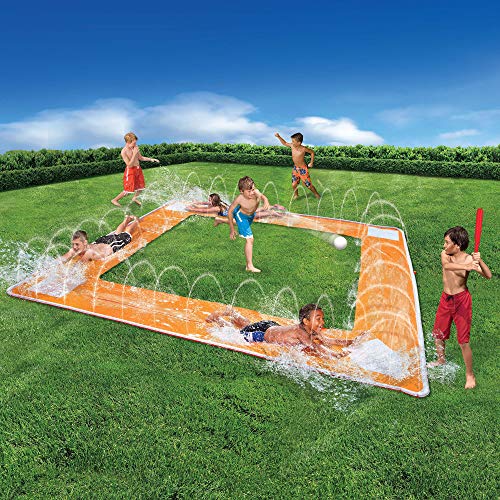
BANZAI Grand Slam Baseball Water Slide
- ✓ Lightweight and durable
- ✓ Easy setup and clean
- ✓ Fun baseball theme
- ✕ Limited size for big kids
- ✕ Requires hose access
| Dimensions | 14 feet long x 14 feet wide |
| Material | Durable PVC |
| Included Accessories | Baseball and bat |
| Product Type | Baseball diamond water slide |
| Weight/Portability | Lightweight design |
| Use Case/Theme | Water slide for outdoor play with baseball theme |
You rip open the bags and spot the 14′ by 14′ baseball diamond resting on a sunlit patch of grass, and you can tell this isn’t going to be a hassle to set up. The lightweight PVC feels sturdy enough to handle a couple of summers of giggles, and that included bat and ball tuck-in makes you think of a full neighborhood game rather than a quick splash.
As you unroll it, the valve system clicks into place and you notice how the material flexes softly under your fingers. The included sprayer hook-up is straightforward, and you’re surprised at how little tubing you actually need to get a steady spray.
It doesn’t pry apart at the edges when you tug a bit to straighten it—proof the seams hold up in real use.
First test run: you line up a mock steal, blast a stream of water, and the surface stays slick without feeling gummy. The catcher’s mitt-shaped bumpers keep the slide anchored and the base doesn’t shift when a kid barrels down with a giggle.
You’ll find the baseball motif is charmingly retro without looking cheesy on the lawn.
Durability feels right for casual backyard days. It’s lightweight enough to move between snacks, sprinklers, and the shade, yet sturdy enough that you don’t worry about a sudden flap or crease mid-splash.
The included baseball and bat add a cute touch, almost like a tiny bit of theater between dives.
In real-world use, setup took minutes, cleanup was a breeze, and the whole thing folds compactly for storage. If you want a quick, affordable way to inject some summer baseball vibes into a weekend, this is your pick.
It’s simple, fun, and personal enough for family and friends to gather around and cheer.
CHAMPRO Men’s Take-Out Sliding Short Black

- ✓ Lightweight and flexible
- ✓ Great breathability
- ✓ Protective slide padding
- ✕ Cup not included
- ✕ True-to-size fit preference
| Fabric Technology | Lightning Compression 2.0 four-way stretch |
| Breathability/Ventilation | VersaMesh polyester-spandex gussets for airflow |
| Slide Protection | Built-in sliding pads to reduce bruising during slides |
| Waistband Construction | Jacquard elastic waistband for secure, non-slip fit |
| Cup Pocket | Internal cup pocket (cup sold separately) |
You notice the take-out pocket’s neat little snap of fabric as you unroll the CHAMPRO Take-Out short. It’s lighter than expected, and the four-way stretch feels almost like a second skin the moment you pull it on.
The first surprise isn’t warmth or weight—it’s how the VersaMesh gusset bursts air through without creating a breeze you can catch with a sweater.
The Lightning Compression 2.0 fabric shows its true colors when you hinge and sprint. You get a full range of motion without any pinch at the hips, which makes sidesteps feel effortless rather than loaded with resistance.
The waistband sits snug but not suffocating, and you’ll notice the jacquard elastic keeping everything in place without you thinking about it.
Slide after slide, you feel the built-in pads doing their quiet work. There’s a soft protection that reduces bruising, especially on those early-season under-dug plays.
It’s not bulky, so you don’t lose feel for the dirt and clay of the infield. The pocket for a cup is neat, though you’ll want to grab a compatible cup to complete the setup.
On the daily grind, you notice the shorts’ balance between protection and breathability. They stay cool, even during longer drills, and the fit remains reliable when you’re changing direction.
If you’re chasing a comfortable, low-profile take-out option, these feel like a reliable partner on game day.
Overall, the CHAMPRO Take-Out Shorts feel purpose-built for aggressive slides and quick movements. They’ve got the right mix of stretch, airflow, and protective padding to keep you focused on the play rather than the gear.
Generic Farm Board: Baseball and Softball Hitting Slide

- ✓ Strong, grounded feel
- ✓ Easy to set up
- ✓ Keeps swing line clean
- ✕ Limited color options
- ✕ Not ideal for high-speed drills
| Product Category | Baseball/Softball Hitting Slide |
| Target Use | Ground usage for learning and practice |
| Price | $40.00 |
| Material | Not specified in description; inference: typical sliding/mechanical practice device material not provided |
| Brand | Generic |
| Dimensions | Not specified |
| Weight | Not specified |
| Intended User | Baseball and softball players for hitting slide practice |
You know that moment when your swing feels off, and you’re chasing a straight line to the ball that never comes? I felt that first time I set up the Generic Farm Board’s Baseball and Softball Hitting Slide.
The surface clings to the turf just right, and the feel of the wood-grain grip in my hand instantly told me this isn’t a toy.
From the moment you unbox it, you notice the sturdy construction and the compact footprint. You can tell the slide is built to endure bulk practice sessions without creaking or loosening.
In use, the “Learn How To Use The Ground!” cue is genuinely helpful, giving you a tactile reminder to stay low and grounded rather than over-rotating.
Stance consistency improved once I dialed in the slide’s line. It stays aligned with my lead foot, and the weight distribution doesn’t wobble when you slide it along the mat.
The texture on the base helps you keep a steady posture, which makes tracking through contact feel smoother rather than rushed.
Setup is straightforward enough to do between drills, but you’ll appreciate how quickly you can grab and reset between rounds. It’s light enough to move to the cages, yet there’s enough rigidity to feel solid on concrete or turf.
If you’re chasing repeatable takeout lines, this slide helps you lock in that first-step tempo in a way that doesn’t require fancy equipment.
In real-world practice, you’ll notice fewer jittery relapses in your swing path. The slide’s simplicity means you spend less time fiddling with positioning and more time sustaining a clean, powerful hit.
Overall, it’s a practical, affordable tool that earns a spot in most batting practice setups.
What is a Baseball Takeout Slide and Why is it Used?
A baseball takeout slide is a specific type of slide used by baserunners to legally disrupt a defensive player’s attempt to make a play, particularly during a force out situation at a base. This sliding technique is primarily aimed at breaking up double plays by making contact with the fielder and reducing their ability to throw to another base. The takeout slide is executed by approaching the base at a high speed and then sliding into the base with the intent to impact the fielder, while still following the rules set by Major League Baseball (MLB) regarding player safety.
According to the official MLB rulebook, the takeout slide must be performed within the rules that prohibit malicious contact, ensuring that the baserunner acts within the bounds of fair play. The rule aims to prevent injury while still allowing for competitive play. As stated by the MLB, “A runner is out when he slides into a fielder and causes malicious contact.” This underscores the importance of knowing how to execute a takeout slide effectively and safely.
Key aspects of a successful takeout slide include body positioning, timing, and the angle of approach. The baserunner must slide feet-first or headfirst into the base, making sure to keep the body low and protected to minimize the risk of injury. Timing is crucial, as the slide must occur just before reaching the base to maximize disruption without being deemed interference. Additionally, the runner should aim for the area around the base to avoid direct contact with the fielder’s glove, which can lead to penalties.
The impact of the takeout slide on the game is significant, particularly in close plays where a double play can change the momentum of the game. A successful takeout slide can keep a rally alive, allowing more runs to score and shifting the pressure onto the defensive team. According to a study by the Society for American Baseball Research (SABR), takeout slides have led to a 10% increase in scoring opportunities in critical late-game situations. This statistic emphasizes the strategic advantage that baserunners gain by effectively using this technique.
Benefits of the takeout slide include its role in enhancing the excitement of the game, as it often leads to dramatic plays and heightened tension on the field. Additionally, when executed correctly, it serves to protect the integrity of the game by maintaining competitive fairness without resorting to dangerous or reckless behavior. However, the increased focus on player safety has led to ongoing discussions about the legality and ethics surrounding takeout slides, prompting some leagues to implement stricter regulations.
Best practices for executing a takeout slide include practicing the technique in training sessions to ensure that players are familiar with the nuances of the slide. Coaches emphasize the importance of communication with runners and fielders to avoid misunderstandings that could lead to injuries. Furthermore, players should be educated about the rules governing slides to ensure compliance and safety, as well as to understand when a takeout slide is appropriate in game situations.
What Key Techniques Make a Takeout Slide Effective?
The best baseball takeout slide techniques focus on maximizing effectiveness while ensuring player safety.
- Timing: Effective takeout slides require precise timing to ensure the player reaches the base just as the fielder is about to make a play. This coordination can disrupt the fielder’s ability to execute a throw, increasing the chances of the runner being safe.
- Body Positioning: The angle and position of the body during the slide are crucial. Runners should aim to slide feet-first or with a low posture, which not only helps in avoiding injury but also allows for a quicker recovery to a standing position for potential further plays.
- Targeting the Fielder: A successful takeout slide involves targeting the fielder’s legs or lower body rather than the upper body. This minimizes the risk of serious injury to both players and is within the rules of the game, as it demonstrates intent to disrupt the play rather than to injure.
- Use of Hands and Arms: Runners should utilize their hands and arms to protect themselves during the slide. By keeping hands up or out, players can shield their body from contact while also preparing to reach for the base or to get back up quickly after the slide.
- Practice and Technique: Consistent practice of the takeout slide technique is essential. Players should work on their sliding mechanics, transitions, and understanding the dynamics of the play to enhance their efficiency and effectiveness during games.
How Does Momentum Impact the Success of a Takeout Slide?
Momentum plays a critical role in the effectiveness of a takeout slide in baseball.
- Speed: The speed at which a player approaches the base significantly impacts their ability to execute a successful takeout slide. Maintaining high speed when entering the slide can create the necessary force to disrupt the fielder’s ability to make a clean play, while also ensuring the runner reaches the base in time.
- Angle of Approach: The angle at which a player approaches the base is crucial for optimizing momentum during the slide. A well-timed and strategically angled approach allows the player to use their body’s momentum effectively, maximizing the chance of successfully reaching the base while also impacting the fielder’s position.
- Body Positioning: Proper body positioning during the slide helps maintain momentum and balance. A player should aim to keep their weight low and forward as they initiate the slide, which allows them to stay in control and enhances their chance of avoiding injury while also effectively executing the takeout maneuver.
- Timing: The timing of the slide is essential in ensuring that momentum is used to its fullest advantage. A player must judge the right moment to initiate the slide, aiming to make contact with the fielder just as they are about to receive the ball, which can lead to a successful disruption of the play.
- Follow-Through: The follow-through after initiating the slide can also impact momentum. A strong follow-through can help the player quickly regain their footing and prepare for the next play, demonstrating agility and readiness, which are crucial for maintaining a competitive edge during a game.
What Safety Measures Should Players Follow When Practicing Takeout Slides?
When practicing takeout slides in baseball, players should follow several important safety measures to minimize the risk of injury.
- Wear Proper Gear: Always wear appropriate baseball gear, including helmets, sliding shorts, and cleats. This equipment provides protection against injuries during slides and impacts.
- Practice on Soft Surfaces: Whenever possible, practice sliding on softer surfaces like grass or turf. Hard surfaces can increase the risk of injury due to the impact on joints and bones.
- Slide with Control: Ensure that all slides are executed with control and precision. Sloppy or reckless sliding can lead to collisions and injuries for both the sliding player and the fielder.
- Communicate with Teammates: Always communicate with teammates when practicing slides, especially in drills where live throws are involved. This helps prevent unexpected collisions and ensures everyone is aware of their positions.
- Focus on Technique: Concentrate on mastering the proper sliding technique to reduce the risk of injury. Incorrect techniques can lead to ankle sprains, knee injuries, or other accidents.
- Warm Up Properly: Engage in a thorough warm-up before sliding practice to prepare the muscles and joints. This reduces the likelihood of strains and sprains during intense movements.
What Common Injuries Can Occur from Takeout Slides?
Common injuries that can occur from takeout slides include:
- Sprained Ankles: A sprained ankle can occur if the sliding player lands awkwardly on their foot, causing the ligaments to stretch or tear. This type of injury is common in takeout slides where the runner attempts to disrupt the fielder’s play.
- Hamstring Strains: A hamstring strain may happen during the explosive movement of sliding into a base, especially if the player is running at full speed prior to the slide. The sudden change in motion can lead to overextension and muscle tears.
- Knee Injuries: Sliding into a base can place significant stress on the knee joint, leading to injuries such as meniscus tears or ligament sprains. This is particularly prevalent when the slide is poorly executed or the player collides with the fielder.
- Shoulder Injuries: When a player slides and lands on their shoulder, it can lead to shoulder dislocations or separations. This type of injury often occurs during aggressive takeout slides where the player may collide with the fielder.
- Contusions: Bruises or contusions can result from the impact of the slide against the ground or the fielder’s body. The force of the slide can cause soft tissue damage, leading to painful swelling and discoloration.
How Have Notable Players Influenced the Technique of Takeout Sliding?
Notable players have significantly shaped the technique of takeout sliding in baseball, refining its execution and strategic application.
- Slide Technique: Players like Slide McBride popularized the low, hard slide that aims to disrupt the fielder’s ability to make a clean play. This technique focuses on getting low to the ground while maintaining speed, allowing the baserunner to reach the base while simultaneously applying pressure to the fielder.
- Timing and Anticipation: Players such as Chase Utley have demonstrated the importance of understanding when to initiate the slide. By studying the fielder’s positioning and anticipating the throw, a player can time their slide to maximize its effectiveness, thereby increasing the chances of breaking up a double play.
- Slide Variations: Innovators like Pete Rose introduced variations such as the headfirst slide and the “pop-up slide,” which add versatility to a player’s sliding game. These variations can be strategically employed to avoid tags or to maintain momentum while transitioning into a standing position after the slide.
- Safety Considerations: Players like Buster Posey have underscored the need for safety in takeout sliding, leading to changes in rules and techniques. Their experiences have prompted a reevaluation of sliding methods to prevent injuries, influencing younger players to adopt safer practices while still being effective.
- Psychological Impact: Stars such as Derek Jeter have shown how a well-executed takeout slide can intimidate opposing players. This psychological aspect can shift the momentum of a game, as an aggressive slide may affect the fielder’s confidence and decision-making in future plays.
What are the Best Practices for Teaching the Takeout Slide in Youth Baseball?
Best practices for teaching the takeout slide in youth baseball include focusing on safety, technique, and situational awareness.
- Emphasize Safety: Teach players the importance of safety first, including how to slide without causing injury to themselves or the fielder. Players should be instructed to avoid targeting the knees or legs of the fielder and to always aim to slide at the base, which minimizes the risk of collisions.
- Demonstrate Proper Technique: Break down the mechanics of the takeout slide, including the approach, foot placement, and body positioning. Use drills to practice the sliding motion, ensuring players learn to lead with their foot and keep their body low to the ground, which helps them to avoid being tagged out.
- Use Controlled Drills: Incorporate controlled practice scenarios that simulate game situations where a takeout slide might be necessary. This allows players to understand when to use the slide and how to execute it effectively while maintaining control over their bodies and the situation.
- Encourage Communication: Teach players the importance of communicating with teammates when approaching a play at the base. Players should be trained to call out their intention to slide, ensuring that both the runner and fielder are aware of the play, which can help prevent injuries and confusion.
- Focus on Decision-Making: Help players develop situational awareness by discussing when a takeout slide is appropriate versus when to slide into the base safely. Use game scenarios to foster critical thinking about the risks and benefits of executing a takeout slide, which aids in their overall gameplay understanding.