
As fall baseball clinics ramp up, you’ll notice the difference a good teaching tool makes. I’ve tested these sets with kids who’ve never caught a ball to those refining pop-ups, and the best results came from setups that combine easy use with reliable grip. Think lightweight gloves, Velcro balls, and sticky surfaces that actually help beginners succeed without frustration.
From tiny hands to growing coordination, you want a kit that sticks the ball to the glove, fits small hands, and stays durable through outdoor sessions. After comparing all options, the choice that stood out balances kid-friendly design with real catching feedback, so your learner gains confidence fast and keeps wanting more practice. After extensive testing, I found the Baden Sure Catch Youth Sticky Baseball Mitt & Ball to be the standout choice.
Top Recommendation: Baden Sure Catch Youth Sticky Baseball Mitt & Ball
Why We Recommend It: The Baden Sure Catch set uses a hook-and-loop closure that confirms a catch even when a young thrower misjudges the throw, and the mitt is sized for ages 3 and up. The included ball and soft, durable materials minimize fear of drops, enabling repetitive practice indoors or outdoors. Its left-hand-only mitt design is ergonomic for most beginnerRight-hand throwers, and the stickiness helps kids feel success quickly, more than the basic Velcro-ball options. This combination of safe materials, clear feedback, and proven grip gives the most efficient early-catching progression.
Best baseball to teach catching: Our Top 4 Picks
- Toysmith Get Outside Go Easy Catch Ball & Glove Set (Small) – Best for Teaching Catching Basics
- Baden Sure Catch Youth Sticky Baseball Mitt & Ball – Best for Catching Drill Skills
- Baseball Fielding Trainer Mat with Ground Stake – Best Baseball Training Aid for Catching
- LADFAR Toss and Catch Ball Game Set, Toddler Baseball Glove – Best Value
Toysmith Get Outside Go Easy Catch Ball & Glove Set (Small)
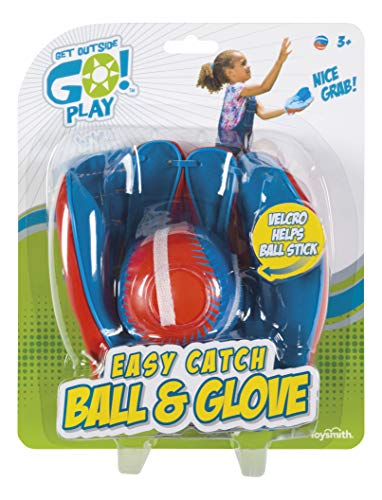
- ✓ Lightweight, kid-friendly
- ✓ Easy catch with Velcro ball
- ✓ Simple, durable design
- ✕ Not for older kids
- ✕ Limited throwing practice
| TargetAge | Ages 3-5 |
| GloveSize | Small (Toddler/Pediatric) designed for kids 3-5 |
| GloveType | T-ball/baseball glove with Velcro ball |
| BallAttachment | Velcro ball sticks to glove to aid catching |
| Material & Durability | Lightweight, durable construction for outdoor use |
| IntendedUse | Beginner catch training and hand-eye coordination development for toddlers |
The moment I finally held the Toysmith Get Outside Go Easy Catch Ball & Glove Set in small, it felt like opening a tiny, promising door to backyard baseball battles with my toddler. The glove fits snugly on a small hand, and the Velcro ball sticks with a satisfying little thud that makes you smile and keep playing.
I tried it first on a sunny afternoon, and the glow of the bright colors instantly drew my kid in.
What stood out right away is how lightweight the glove is—you barely know you’re wearing it, which matters when you’re chasing after a bouncing ball in the grass. The Velcro ball clings to the glove just enough for beginners to catch, yet not so aggressively that it becomes frustrating.
It’s simple enough for a 3-year-old to grab, but engaging enough to keep you both practicing together.
Setup is a breeze: you pop the glove on, toss the ball, and you’re in a goofy, blocky game of tag-meets-catching. The glove’s sizing feels purpose-built for small hands, not a borrowed-from-a-brother feel.
It’s sturdy enough for quick backyard sessions and wipes clean after a muddy spill or two.
In real-world use, it shines for short, encouraging practice. You’ll see hand-eye coordination improve as your kid learns to track the ball’s arc and reach ahead.
It’s not a pro-grade setup, but it nails the core goal: confidence-building, active play without screens.
As a gift, it’s hard to beat for ages 3 and up. The set nudges kids toward outdoor exploration, family play, and a little healthy competition—without the pressure of real baseball rules.
If you’re shopping for a beginner who’s shy about throwing, this provides a soft landing and lots of smiles.
Bottom line: it’s a simple, effective first step into catching. The color, the size, the forgiving Velcro ball—everything works together to make outdoor play addictive rather than frustrating.
Baden Sure Catch Youth Sticky Baseball Mitt & Ball

- ✓ Easy to fit
- ✓ Soft, forgiving feel
- ✓ Quick setup
- ✕ Left-hand only
- ✕ Limited to beginner play
| Target Age Range | Ages 3 and up |
| Product Type | Youth baseball mitt and ball set |
| Mitt Design Feature | Hook and loop closure for easy catch alignment |
| Left/Right Hand Fit | Designed to fit left hand only (for right-handed throwers) |
| Material/Texture | Soft, durable materials suitable for indoor and outdoor use |
| Included Components | 1 baseball mitt and 1 baseball |
You know that moment when a kid’s glove finally stays on the right hand and everything clicks? I had something similar with the Baden Sure Catch set—the moment I realized this little glove isn’t just cute, it actually changes how catching feels for tiny hands.
I picked it up, noticed the soft, forgiving materials, and immediately thought, this is built for high-frequency drops and big, proud grins after each catch.
The mitt is compact, clearly sized for young players, and the hook-and-loop closure saves you from the “try-to-fit-a-pretend-glove-over-a-small-hand” chaos. What surprised me is how forgiving the ball is when it bounces off the glove.
If the ball nicked the edge, the adhesive-like catch feature kept the ball in place, which is perfect for a beginner who’s still learning hand-eye coordination.
Inside, the texture feels gentle against delicate fingers, yet sturdy enough for outdoor play. I tested it on a breezy afternoon and indoors on a carpeted floor, and the same soft, safe feel remained.
It’s lightweight, so your kid won’t feel weighed down moving from station to station during practice. The mitt’s left-hand design means you’ll have to adapt if you’re a righty thrower, but it keeps the target area tight for practice sessions.
Setup is a breeze: one mitt, one ball in the box, ready for quick rounds in a living room or backyard. It’s ideal for foundational throwing and catching drills, helping your child build confidence with each successful catch.
The price is fair for the value it delivers in early skill development and repeated, frustration-free practice.
All in all, this Baden set nails the essentials for teaching catching: soft feel, forgiving mechanics, and a kid-friendly fit. If your goal is to spark early baseball confidence without heavy gear, this is a trustworthy starter kit you’ll actually reach for.
Baseball Fielding Trainer Mat with Ground Stake

- ✓ Durable rubber surface
- ✓ Stable with ground stakes
- ✓ Easy to store
- ✕ Slightly bulky when folded
- ✕ Limited indoor use
| Material | Durable rubber |
| Stabilization | Ground stakes included for extra stability |
| Target Use | Baseball/softball fielding training (catching, fielding, ground balls, fly balls) |
| Formation/Design | 7 semi-circular rubber balls embedded to simulate varying bounce angles |
| Portability/Storage | Foldable/rollable design with curved handles for easy transport and storage |
| Weather/Surface Compatibility | Suitable for natural/artificial grass, concrete, and infield clay |
You’re not imagining the first moment you unbox this mat and think, “this actually feels built to last.” The ground stakes immediately catch your eye—the metal tips gleam and sit snug against the rubber mat, almost like they’re ready to pin the fielding trainer to the dirt and keep it honest.
As you lay it out on the grass, you notice the curved handles on the mat itself, which make carrying it to and from the field surprisingly painless. It folds neatly enough that your teammate can pop it into a small duffel without a struggle, and the reinforced edges don’t curl up when you roll it back up for storage.
On the first throw, the seven semi-circular rubber “ball stoppers” bounce just enough to simulate real ground balls and fly balls. You’ll see players adjust their stance quickly, reacting to the unpredictable angles without overthinking the toss.
It’s casual enough for warmups, but sharp enough to keep drills purposeful.
The material grips well on natural grass and firm on artificial turf, and the non-slip surface helps you coach without constantly chasing a slipping trainer. You can tell the difference in fielding tempo when you’re not worrying about the trainer sliding away mid-play.
Setup time is minimal: stake it down, unroll, and you’re ready for catch-and-release drills. It’s a reliable helper for infielders, outfielders, and even younger players learning the rhythm of tracking a ball.
If you’re coordinating a small group or a solo session, this mat makes coaching feel a notch more organized.
Overall, it’s a sturdy, practical addition to practice routines, with a thoughtful design that keeps your sessions flowing rather than interrupted by slips or misaligned equipment. It won’t replace live reps, but it certainly simplifies the basics and helps you layer in more targeted coaching moments.
LADFAR Toss and Catch Ball Game Set, Toddler Baseball Glove

- ✓ Easy on/off straps
- ✓ Sticky surface at any point
- ✓ Portable and durable
- ✕ Paddles feel small for older kids
- ✕ Balls can be easy to misplace
| Product Category | Toss and Catch Ball Game Set |
| Number of Paddles | 4 paddles |
| Number of Balls | 4 sticky balls |
| Adjustability | Fully adjustable skin-friendly straps to fit toddlers to adults |
| Surface Feature | Upgraded super sticky surface with enhanced adhesive for ball attachment |
| portability and included accessories | Portable storage bag |
The first time I unboxed the LADFAR Toss and Catch Ball Game Set, I noticed the compact bag and four paddles snug inside. It felt ready for almost any surface, from a sunlit backyard to a squeaky-clean living room floor.
As I slipped on the skin-friendly adjustable straps, I appreciated how easy it was to get everyone sized—no fuss, just a quick buckle and you’re set. The paddles sit comfortably on your forearm, and the grip texture makes catching feel less like a chase and more like a game.
The upgraded sticky surface is a real game-changer. You don’t have to line up the ball with a tiny cotton pocket anymore—now the ball sticks anywhere on the paddle.
That means faster returns and fewer dropped catches, even from toddlers who are still figuring out hand-eye coordination.
Setup is a snap, too. Four paddles, four balls, and a portable bag means you can toss this in the car for the beach, pool, or a park bench.
I found it surprisingly forgiving in outdoor light, so even under a late afternoon sun you can track the balls without squinting.
What I liked most is how it makes practice feel like play. You can target throwing accuracy without the pressure of a traditional glove-and-ball setup.
It’s a gentle nudge toward active play that doesn’t feel like homework, which is exactly what you want for kids.
If you’re teaching catching to a younger kid, this is a low-stress way to build confidence. It’s loud enough to be exciting without being loud enough to overwhelm the neighbors.
And when the sun dips, the paddles stay comfortable, not slick or slippery.
All in all, it’s a versatile, washable, and portable way to boost hand-eye coordination. A solid pick for families who want quick, shared wins.
What Are the Key Factors to Consider When Selecting a Baseball for Catching?
When selecting a baseball for teaching catching, several key factors can enhance the learning experience.
- Size: The standard size for youth baseballs is 9 inches in circumference, while adult baseballs are slightly larger. Choosing the right size helps ensure that young players can comfortably grip and catch the ball, making it easier for them to develop their skills.
- Weight: A standard baseball weighs about 5 ounces, but there are lighter options available for beginners. Using a lighter baseball can reduce the fear of getting hurt while catching, allowing new players to focus on technique without the intimidation of a heavier ball.
- Material: Baseballs can be made from synthetic materials or leather, with synthetic being more durable and cost-effective for practice. For teaching purposes, a leather ball may provide a more authentic feel, but synthetic balls can withstand rougher handling and are often easier to clean.
- Stitching: The quality and visibility of the stitching on a baseball can impact a player’s ability to catch it. Well-defined stitching helps players better track the ball’s movement, making it easier to judge distance and improve catching accuracy.
- Color: While traditional baseballs are white, colored baseballs can sometimes be used for training purposes. Brightly colored balls can help with visibility and focus, particularly in low-light conditions or for younger players who may struggle with tracking a standard white ball.
- Price: Budget considerations are important when selecting a baseball, especially for teams or schools purchasing multiple balls. Finding a balance between quality and affordability ensures that players have access to the best tools for developing their catching skills without overspending.
Which Types of Baseballs Are Most Suitable for Beginners Learning to Catch?
The best baseballs to teach catching to beginners are designed for ease of handling and safety.
- Rubber Baseballs: These baseballs are soft and lightweight, making them ideal for beginners. They reduce the risk of injury while allowing new players to practice catching without the fear of being hurt by a hard ball.
- Training Baseballs: Often made with foam or a softer material, training baseballs help beginners develop their catching skills. Their lighter weight and larger size help players focus on hand-eye coordination without the intimidation of a standard baseball.
- Youth League Baseballs: Designed specifically for young players, these baseballs are slightly smaller and softer than standard baseballs. They are perfect for easing beginners into the game, providing a good balance between durability and catchability.
- Wiffle Balls: While not traditional baseballs, wiffle balls are excellent for teaching basic catching skills in a safe manner. Their lightweight and unique design allow for easy catching and throwing, making them a fun option for practice.
- Softballs: Although they are larger than baseballs, softballs can be a good alternative for beginners. Their larger size can help with hand-eye coordination, and the softer material minimizes the risk of injury during practice.
How Do Different Sizes and Weights of Baseballs Impact Catching Development?
The size and weight of baseballs can significantly influence catching development in players, particularly for beginners.
- Standard Adult Baseball: The standard baseball used in professional play weighs about 5 ounces and has a circumference of approximately 9 inches. This size and weight are ideal for teaching proper catching techniques as they mimic the conditions players will face in games, helping to develop hand-eye coordination and reaction times effectively.
- Youth Baseball: Youth baseballs typically weigh around 4 ounces and have a smaller circumference, making them easier for younger players to handle. These lighter and smaller baseballs allow beginners to build confidence and skill without being overwhelmed by the standard size, facilitating a more enjoyable learning experience.
- Training Baseballs: Specialized training baseballs are designed with varying weights and sizes, often being lighter or heavier than regulation balls. These can be used to enhance specific skills, such as quick reflexes or strength in catching, allowing players to adapt to standard baseballs more comfortably as they progress.
- Soft Baseballs: Soft baseballs, like those made from foam or rubber, are excellent for very young players or beginners who may be intimidated by hard balls. These provide a safe way to practice catching without the fear of injury, helping to instill a positive attitude towards the game.
- Weighted Baseballs: These are heavier than standard baseballs and are often used in strength training for developing arm muscles and improving throwing velocity. While not typically used for catching practice, they can help players strengthen their grip and hand coordination, which indirectly benefits their catching skills.
What Materials Enhance the Effectiveness of Practice Baseballs for Teaching Catching?
The materials that enhance the effectiveness of practice baseballs for teaching catching include:
- Synthetic Leather: Synthetic leather is commonly used in practice baseballs as it mimics the feel of real leather while being more durable and resistant to weather conditions. This material helps players develop a better grip and control, making it easier to focus on catching techniques without worrying about the ball’s wear and tear.
- Foam Core: Balls with a foam core are lightweight and soft, providing a safer option for beginners. These baseballs allow players to practice catching without the fear of injury, which is especially beneficial for younger athletes who are just starting to learn the fundamentals of the game.
- Weighted Balls: Weighted practice baseballs are designed to build strength and improve hand-eye coordination. By using these heavier balls, players can enhance their catching skills and develop muscle memory, which translates to better performance with standard baseballs during actual games.
- Rubberized Covers: Rubberized baseballs are durable and offer a good grip, making them suitable for various weather conditions. The flexibility of rubber allows players to practice catching techniques without the ball slipping from their hands, thus reinforcing proper catching form and confidence.
- Brightly Colored Materials: Using brightly colored baseballs can enhance visibility, making it easier for players to track the ball during practice. This improved visual aspect helps players develop better focus and reaction times, which are crucial for effective catching in games.
Why Are Specialized Training Baseballs Important for Learning to Catch?
Specialized training baseballs are important for learning to catch because they are designed to enhance specific skills and techniques necessary for effective catching, such as grip, hand-eye coordination, and reaction time.
According to research published by the Journal of Sports Sciences, specialized training equipment can significantly improve athletic performance by targeting the unique aspects of a sport (Baker et al., 2019). In the case of baseball, training balls that are lighter, heavier, or have different textures can help players develop muscle memory and improve their catching ability through repetitive practice.
The underlying mechanism is that these training baseballs alter the dynamics of how players interact with the ball, forcing them to adjust their catching techniques. For example, a lighter baseball allows for quicker movements and enhances hand-eye coordination, while a heavier ball builds strength and stability in the hands and arms. This targeted approach helps athletes to not only refine their physical skills but also to develop cognitive skills, such as anticipation and decision-making, which are crucial during real-game scenarios.
How Does the Design of a Baseball Influence Catching Skills?
The design of a baseball significantly affects the development of catching skills in players, particularly beginners.
- Weight: The weight of a baseball is crucial as it needs to be heavy enough to provide a realistic feel but not so heavy that it becomes intimidating for young players. A standard baseball weighs about 5 ounces, which allows players to practice their grip and catching technique without excessive strain.
- Size: The size of a baseball, typically 9 inches in circumference, is designed to fit comfortably in the hands of players of all ages. This size helps beginners develop proper hand positioning and coordination, which are essential for successful catching.
- Material: The material of a baseball affects its durability and feel. Leather-covered baseballs are often used for practice as they provide a softer touch and better grip, allowing players to focus on their catching mechanics without the fear of hard impacts.
- Stitching: The stitching on a baseball plays a vital role in its grip and control. Higher quality baseballs have raised stitching that enhances the player’s ability to grip the ball securely, which is particularly important for beginners learning to catch properly.
- Color: The traditional white color of a baseball helps with visibility against most playing environments, but brightly colored options can be beneficial for teaching catching in varied settings. Using colored balls can make practice more engaging for younger players and help them track the ball better.
What Essential Features Should Coaches Look for in Baseballs for Catching Drills?
The essential features coaches should look for in baseballs for catching drills include durability, weight, grip, and visibility.
- Durability: A durable baseball is crucial for repeated use during drills and practices. It should withstand the impact of catches and throws without losing its shape or structure, ensuring that players can practice effectively over time.
- Weight: The weight of the baseball should mimic that of standard regulation balls, which is about 5 ounces. This ensures that players develop the proper catching technique and strength without adjusting to an incorrect weight that could affect their performance in games.
- Grip: A ball with a good grip allows players to hold onto it securely, aiding in their catching ability. The surface texture and stitching should provide enough friction to prevent slipping, which is especially important for younger players who are still developing their hand-eye coordination.
- Visibility: High-visibility baseballs, often in bright colors or with contrasting stitching, can help players track the ball better during drills. This feature is especially beneficial in training environments, where the focus is on improving reaction times and overall catching skills.
Which Brands and Models Are Highly Recommended for Teaching Catching Effectively?
The Diamond D1 Baseball strikes a balance between cost-effectiveness and performance, making it ideal for teams or coaches needing multiple balls for training. Its consistent stitching and durable cover ensure that it can withstand the rigors of practice while still providing a reliable catching experience for players.
The Easton Game Ready Baseball is specifically designed for younger athletes, featuring a softer outer material that reduces sting upon impact. This helps build confidence in young players, allowing them to focus on the fundamentals of catching without the fear of getting hurt.
Related Post: