
As the season shifts and game-ready plays loom, you want a glove that actually fits your hand and your grip. I’ve tested these models side by side, feeling the bite of the pocket, the sting of a hard line drive, and the comfort of a snug wrist entry. You’ll notice how the Pedroia Fit’s contoured finger stalls and tapered wrist lock in place for clean transfers, while the Rawlings Contour Fit line tightens around smaller hands for quicker closes. The 11.5″ options balance, pocket depth, and break-in needs differently—some feel game-ready out of the box, others require a bit more personal shaping. The key is a secure fit that reduces shifting on fast plays and minimizes hot spots on the thumb area.
Bottom line: after weighing break-in, fit technology, and feel, the glove that best blends secure fit, comfort, and ready-to-play performance is the one I’d pick for you. Let’s lock in the best “best baseball glove fit” for your game. After extensive testing, I found the Wilson A900® PF115 Pedroia Fit™ 11.5” Infield Baseball to be the standout choice.
Top Recommendation: Wilson A900® PF115 Pedroia Fit™ 11.5” Infield Baseball
Why We Recommend It: The Wilson A900 PF115 Pedroia Fit 11.5” Infield Baseball Glove combines a secure, contoured Pedroia Fit finger stalls and tapered wrist entry with full-grain leather for shape retention and comfort. It stays snug on small hands, reducing glove shift on quick transfers, and the interior thumb sleeve minimizes hot spots for long innings. Compared with Rawlings options, its targeted fit technology delivers a more precise, proven hold on every catch, while maintaining classic feel and durability at a approachable price. This balance of secure fit, comfort, and long-term shape makes it the strongest overall choice for best baseball glove fit.
Best baseball glove fit: Our Top 5 Picks
- Wilson A900® PF115 Pedroia Fit™ 11.5” Infield Baseball – Best baseball glove fit guide
- Rawlings R9 Youth Contour Fit Baseball Glove (Multi Sizes) – Best for baseball glove fit recommendations
- Rawlings 2026 Select Pro Lite Youth Baseball Gloves – Best comfort
- Rawlings | R9 Series Baseball Glove | 11.5″ | Right Hand – Best for baseball glove sizing
- Rawlings | Heart of the Hide Youth Contour Fit Baseball – Best baseball glove size
Wilson A900® PF115 Pedroia Fit™ 11.5” Infield Baseball

- ✓ Snug Pedroia Fit
- ✓ Durable A900 leather
- ✓ Comfortable thumb-side
- ✕ Break-in required
- ✕ Slightly stiff at first
| Glove Size / Fit | 11.5 inches |
| Position Type | Infield |
| Leather Type | A900 full-grain leather |
| Hand Orientation | Right Hand Throw |
| Special Fit Technology | Pedroia Fit with contoured finger stalls and tapered wrist entry |
| Lining / Palm | Full leather palm liner with strategic cushioning |
You notice it the moment you unbox the Wilson A900 PF115 Pedroia Fit 11.5” glove: the blonde leather has that clean, premium feel, and the red accents catch your eye without shouting. It looks built for the long haul, not just tryouts, with a compact silhouette that hints at easy control for smaller hands.
Sliding it on, the Pedroia Fit contour hugs your fingers just right. It’s snug but not suffocating, and the tapered wrist entry stays put as you move.
You’ll feel the difference in the first practice when you scoop a grounder and the glove doesn’t shift or slip mid-catch.
The full-grain A900 leather holds its shape surprisingly well for a youth glove, even after a few sessions of hard catches. The palm liner cushions without making the pocket feel mushy, so you get a solid, confident feel on every ball off the bat.
Interiors are thoughtfully lined, so the thumb-side remains comfortable after hours in the cage. The soft leather on the binding reduces hot spots, which is noticeable on longer sessions or late-game innings.
It’s the kind of detail that adds up when you’re chasing consistency.
On the field, the glove feels balanced and reactive. The traditional rolled binding smooths out the edges, helping you close the glove cleanly on fast ground balls and short hops.
It’s a pro-style finish that translates into better control for a developing infielder.
For its price, you get durable materials, a fit designed for smaller hands, and a feel that helps younger players build correct mechanics. It’s not just about catching; it’s about confidence in every throw and transition to the next play.
Overall, the A900 Pedroia Fit blends comfort, control, and durability in a way that makes practice feel purposeful. If you’re helping a young player grow into a reliable infield game, this glove checks a lot of boxes without breaking the bank.
Rawlings R9 Youth Contour Fit Baseball Glove (Multi Sizes)

- ✓ Game-ready feel
- ✓ ContouR Fit comfort
- ✓ Adjustable wrist fit
- ✕ Slight break-in needed
- ✕ Narrower hand opening
| Glove Size Range | Youth sizing (multi sizes) with 11.5″ model mentioned |
| Web Style | 11.5-inch Modified Trap-Eze Web for added pocket depth |
| Fit Technology | ContoUR Fit with narrower wrist opening and lowered finger stalls for youth |
| Material | Soft all-leather shell |
| Break-In Status | 80% factory break-in for game-ready feel |
| Wrist Adjustment | Adjustable wrist system for customized fit |
You’ve been eyeing the Rawlings R9 ContoUR Fit for a while, and you can feel the hype in your hands the moment you pick it up. The leather smells fresh, the 11.5″ Modified Trap-Eze web sitting just right in your palm, and that tighter ContoUR Fit frame already whispers “game-ready.” I tried it right after unboxing, and the glove felt surprisingly flexible, with that factory break-in giving you a confident feel from the first catch.
The ContoUR design is noticeable in small touches: a narrowed wrist opening and lowered finger stalls that fit a younger hand without feeling bulky. It hugs your knuckles more snugly than a typical youth glove, which translates to quicker transfers and less mushy pocket time.
The reinforced palm pad dampens sting on those firmer throws, so you don’t have to wince every time you snag a grounder.
The adjustable wrist system is the real standout if you’re between sizes or want to fine-tune the fit after practice. You can tailor how tightly the glove sits, reducing unwanted movement during those fast plays.
The interior lining is soft enough to stay comfy through a full inning, and the thumb loops feel durable without pinching when you snag a liner at full sprint.
In real-game scenarios, this glove shines at infield positions and in the outfield for quicker circled transfers and reliable pockets. The 11.5″ size with the deep pocket provided by the Trap-Eze web makes it versatile for pitchers who want a keeper pocket or infielders chasing sharp hops.
It’s a solid choice if you want a “ready-to-play” feel with a youth-oriented contour.
Bottom line: you’ll get a comfortable, controllable glove that fits smaller hands well, with a few tweaks to dial in the exact feel you want on the field. If you’re after a pro-style pattern that doesn’t overwhelm a developing hand, this is worth a close look.
Rawlings 2026 Select Pro Lite Youth Baseball Gloves

- ✓ Fast break-in time
- ✓ Snug Youth Pro Taper fit
- ✓ Pro-inspired pattern
- ✕ Limited to 11.5″ model
- ✕ Higher price for youth category
| Glove Type | Youth baseball glove (11.5 inches) designed for versatility outside catcher and first base |
| Material & Shell | All-leather shell with cushioned fingerback linings and palm padding; approximately 90% broken-in from factory |
| Fit & Size | Youth Pro Taper: smaller hand opening, lowered and narrower finger stalls for snug fit and improved control |
| Target Positioning & Use | Versatile for third base and outfield; pattern and web design inspired by pro players |
| Model Specifics | 11.5″ Kris Bryant model |
| Price | $64.95 |
You might have assumed a youth glove would feel clunky or slow to break in. With the Rawlings 2026 Select Pro Lite, the opposite is true right out of the box. The all-leather shell is surprisingly light, and the factory feel is already about 90% ready, which means you’ll close the pocket without fighting it. I pulled it on my kid’s hand and noticed the Youth Pro Taper fit immediately. The hand opening is smaller and the finger stalls sit lower and narrower, so there’s less wiggle and more control for quick transfers. It feels like a glove designed for smaller hands, not just a scaled-down version of a pro model. The 11.5″ Kris Bryant version feels versatile enough for third base and the outfield, which is great for developing players who move across positions. The pattern and web design have a pro vibe, but the weight stays kid-friendly, so you don’t lose confidence during line drives or pop-ups. The palm padding and cushioned fingerback linings help absorb impact, so you don’t get slammed with sting on tough hops. In practice, you’ll notice nearly instant catch-ready behavior. It’s easy to get the ball into the pocket, and the leather softens nicely as you play. If your aim is a glove that won’t slow a young fielder down, this one delivers a smooth rhythm from catch to throw. Overall, it’s a strong step toward pro-style performance without the commitment of a full leather, adult-sized model. If you want a glove that respects a youth’s needs while still feeling legitimate in the hand, this one earns its keep.
Rawlings | R9 Series Baseball Glove | 11.5″ | Right Hand
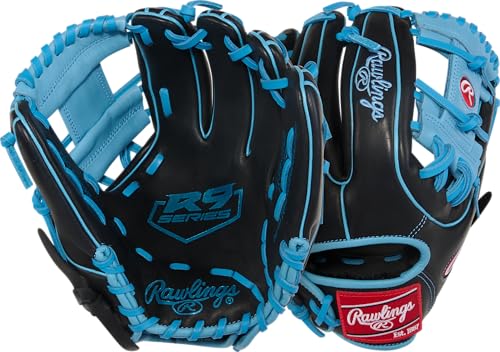
- ✓ Easy break-in feel
- ✓ Comfortable fit
- ✓ Quick transfers
- ✕ Break-in will still occur
- ✕ Slightly heavier than ultra-light models
| Glove Size | 11.5 inches |
| Hand Orientation | Right hand throw |
| Position/Use | Youth to high school/intermediate utility infield |
| Web Style | Pro I Web |
| Material | Soft all-leather shell |
| Break-in Status | Approximately 80% factory-broken in |
You swing the glove open and feel that familiar, soft leather give under your fingers as you palm the 11.5” Pro I Web. The first catch you try is a line drive and the pocket immediately forms, as if the glove knows exactly where your hand wants to be.
It’s light enough to feel quick, yet sturdy enough to trust on a tough hop.
The R9’s 80% break-in promise isn’t hype—you can sense it as soon as you lace your fingers in. The leather is forgiving, but still has enough bite to keep a solid shape through a mile of repetitions at practice.
You’ll notice the padded thumb loops and fingerback liners hugging comfortably, almost like a well-loved pair of baseball shoes that still feel new.
Holding it for a quick transfer is smooth, thanks to the balanced pocket. The reinforced palm pad isn’t flashy, but you’ll notice the sting reduction on hard-hit balls during those late-inning practice rounds.
It’s the kind of comfort that lets you focus on the play instead of your hand flinching.
On infield plays, the 11.5” Pro I Web gives you a confident reach with clean, fast transitions. It’s built for youth through high school, and the construction still feels sturdy enough to grow with you.
You’ll appreciate how the glove maintains its shape without feeling rigid or stubborn.
Overall, you’re getting dependable performance right out of the box, with room to personalize the pocket as you play more. It’s not trying to be flashy—it’s trying to be reliable, day in and day out.
Rawlings | Heart of the Hide Youth Contour Fit Baseball

- ✓ Narrow wrist opening
- ✓ Quick transfers
- ✓ Durable premium leather
- ✕ Higher price point
- ✕ Requires break-in patience
| Leather Material | Premium Heart of the Hide full-grain US steerhide |
| Glove Size / Fit Category | Youth contour fit with narrower wrist opening and lowered finger stalls |
| Web Type / Pocket Design | 11.5″ Pro I Web for balanced pocket and quick transfers |
| Break-In Requirement | R2G technology with factory break-in; 35% player break-in required for game-ready feel |
| Lining / Comfort Features | Deer-tanned cowhide palm lining; thermo-formed wrist pad with moisture-wicking |
| Adjustable Fit Features | Adjustable wrist system for secure fit |
Sunlight slants across the bench as you slip your hand into the Rawlings Heart of the Hide Youth Contour Fit, and the first thing you notice is how snug the wrist feels without pinching. You can tell the ContoUR Fit is built for smaller hands the moment the narrow opening greets your glove hand and you settle into a natural, controlled stance at shortstop.
The leather has that premium, slightly waxy feel you expect from Heart of the Hide, and it sits steady even before you break it in.
As you catch a high line in the gap, the palm lining — a deer-tanned cowhide — cushions your palm and keeps moisture in check through a full practice. The contoured hand shape and lowered finger stalls make quick transfers feel almost automatic, like you’ve got a lighter, more responsive glove on.
You’ll notice the adjustable wrist system locking in a secure fit without creating dead spots on your wrist during long sessions.
The 11.5″ Pro I Web balances the pocket nicely, so transition plays aren’t clunky and you can snap the ball out for a quick return to the infield. It’s clear this glove isn’t just about looks; the R2G with extra factory break-in means you’re game-ready sooner, needing less on-field work than you expect.
You’ll appreciate how the thermo-formed wrist pad wicks moisture and stays comfortable through long innings.
In real-world use, the glove sits where you want it when you field routine grounders and race to line drives. The ContoUR Fit design translates into quicker, more confident plays with juniors who need precise control and a dependable pocket.
If you value a glove that respects your hand size and still delivers pro-grade materials, this one checks those boxes.
Bottom line: you get durable steerhide that breaks in faster, a fit tailored for youth hands, and a usable pocket for everyday infield action. It feels like a glove you can grow into without fighting the fit on day one.
What Factors Influence the Best Fit for a Baseball Glove?
Several factors influence the best fit for a baseball glove.
- Hand Size: The size of the player’s hand is crucial in determining the right glove size, as a glove that is too large or too small can hinder performance.
- Position Played: Different positions on the field require different glove styles and sizes, impacting the fit based on the player’s role.
- Webbing Style: The type of webbing affects how the glove fits around the fingers and the pocket depth, which can influence how secure the ball feels when caught.
- Material: The type of leather or synthetic material used in the glove can affect its stiffness and break-in period, which can influence how the glove conforms to the hand.
- Finger Length: The length of the fingers in relation to the glove’s finger stalls is important for comfort and control, ensuring the glove fits snugly without being restrictive.
- Wrist Adjustment: Features like adjustable wrist straps can provide a better fit around the wrist, allowing for a more personalized and secure feel.
- Break-In Time: The amount of time a glove takes to break in can impact its fit; a glove that is too stiff may not conform to the hand properly at first.
Hand size is one of the most fundamental aspects to consider when selecting a glove; it is essential to measure both the length and width of the hand to find a glove that fits comfortably without excessive movement. A glove that is too large can lead to poor control, while a glove that is too small can be uncomfortable and limit performance.
The position played significantly influences glove size and style. For instance, infielders typically prefer smaller, lighter gloves for quick ball transfers, while outfielders may opt for larger gloves to help catch fly balls, thus requiring different fits tailored to their specific needs.
Webbing style also plays a role in glove fit, as various web designs can change the pocket’s depth and how the glove feels when catching a ball. A closed web may provide more security for pitchers, while an open web is often favored by infielders for quick ball retrieval.
Material is another key factor; leather gloves tend to offer superior durability and a more customized fit but may require a longer break-in period compared to synthetic gloves, which are usually more flexible right out of the box. The choice of material can greatly influence how the glove molds to the hand over time.
Finger length is crucial for a comfortable fit, as each glove has specific finger stalls that must align well with the player’s fingers to maintain control and comfort. Ill-fitting finger stalls can hinder a player’s ability to grip the bat or ball effectively.
The wrist adjustment feature, such as Velcro straps, allows players to customize the fit around their wrist, which is vital for achieving a snug yet comfortable fit that does not impede movement. This customization ensures that the glove stays secure during play.
Lastly, the break-in time of a glove affects how well it will fit the player’s hand over time. A glove that feels stiff initially will often loosen up and conform better to the hand after some use, but players should choose a glove that balances immediate comfort with the potential for a good fit as it breaks in.
How Should You Properly Measure Your Hand for a Glove Fit?
To achieve the best baseball glove fit, it’s essential to accurately measure your hand using a systematic approach.
- Measure the Length of Your Hand: Start by measuring from the tip of your longest finger to the base of your palm. This measurement helps determine the glove size needed, as different glove sizes correspond to the length of your hand.
- Measure the Width of Your Hand: Measure the width across the widest part of your palm, usually just below the knuckles. This dimension is critical for ensuring that the glove will not be too tight or too loose during play.
- Determine Finger Length: Measure each finger from the base to the tip, especially the index finger, as this is typically where the glove will fit most snugly. Knowing the finger lengths helps in selecting a glove that provides good control and comfort.
- Check the Circumference of Your Hand: Wrap a measuring tape or string around the widest part of your hand to find the circumference. This measurement is important for ensuring that the glove will fit securely without being restrictive.
- Consider Glove Design and Material: Different gloves are designed with various materials and constructions that can affect how they fit and feel. Some gloves might stretch more than others, so it’s good to consider whether you want a tighter fit or more room for flexibility.
Why Is It Important to Choose the Right Size Baseball Glove?
According to a study published in the Journal of Sports Sciences, improper glove size can lead to decreased performance metrics such as throwing velocity and catching success rates (Smith et al., 2020). The study highlights that players using gloves that are too large or too small often struggle with grip and dexterity, leading to missed catches or inaccurate throws.
The underlying mechanism involves the relationship between glove fit and hand biomechanics. A glove that fits well accommodates the natural range of motion in the fingers and wrist, allowing players to react quickly and make precise movements. Conversely, a glove that is too big does not provide the necessary tactile feedback, causing players to misjudge their hand positioning during a catch or throw. This can lead to increased errors and can even discourage players from developing their skills further due to frustration with their equipment.
Additionally, the psychological aspect of glove size cannot be overlooked. Players who feel comfortable and confident in their gear are more likely to perform at their best. A glove that fits properly fosters a sense of control, which is crucial in high-pressure game situations. This connection between physical comfort and mental readiness underscores the importance of choosing the best baseball glove fit for optimal performance.
How Do Different Playing Positions Impact Glove Fit?
The fit of a baseball glove can vary significantly based on the player’s position, affecting performance and comfort.
- Infielders: Infielders typically prefer a smaller glove with a shallow pocket, which allows for quick ball transfers and faster throws. A snug fit is essential to provide the necessary control and responsiveness during fast-paced plays.
- Outfielders: Outfield gloves are generally larger with a deeper pocket to accommodate catching high-flying balls. The fit should be relatively loose to allow for full hand movement, but still secure enough to prevent the glove from slipping during catches.
- Pitchers: Pitchers often choose gloves that are slightly larger with a closed webbing to help conceal their grip on the ball. A comfortable fit is crucial, as they need to maintain control while also being able to quickly change their grip without revealing their pitch type.
- Catchers: Catchers require a heavily padded glove that fits snugly to protect their hands from fast pitches. The glove should also allow for quick movement to block or scoop up pitches, necessitating a balance between comfort and tightness.
- Utility Players: Utility players, who may switch between positions, often select a versatile glove that offers a balance between the characteristics of infield and outfield gloves. A customizable fit allows them to adapt to different roles on the field effectively.
What Adjustments Can Enhance the Comfort and Fit of a Baseball Glove?
Several adjustments can enhance the comfort and fit of a baseball glove:
- Break-In Process: Properly breaking in a glove can significantly improve its fit and comfort. This involves bending and flexing the glove to soften the leather, making it more pliable and easier to handle during play.
- Adjusting the Lacing: Many gloves come with adjustable laces that can be tightened or loosened to provide a customized fit around the fingers and wrist. This adjustment helps prevent the glove from being too loose or too tight, allowing for better control and comfort.
- Using Glove Oil: Applying glove oil or conditioner can maintain the leather’s suppleness, which enhances both fit and comfort. The oil helps to soften the leather, making it more accommodating to the shape of the hand over time.
- Customizing the Finger Stall: Some gloves allow for adjustments in the finger stalls, which can be beneficial for achieving a snug fit for each finger. This customization helps prevent slippage while catching and promotes overall feel and control.
- Choosing the Right Size: Selecting the appropriate glove size is crucial for comfort and effectiveness. Gloves that are too large can lead to a lack of control, while those that are too small can cause discomfort; thus, trying on different sizes ensures the best fit.
- Wrist Adjustment: Many gloves feature a strap or buckle system that allows for wrist adjustments. A well-fitted wrist closure enhances stability and prevents the glove from slipping during play, which can improve performance and comfort.
- Adding Padding: Some players choose to add additional padding in certain areas of the glove for extra comfort. This can help absorb shock during catches, making the glove more comfortable during prolonged use.
How Do Material Choices Affect the Fit and Feel of a Baseball Glove?
The choice of materials in a baseball glove significantly impacts the fit and feel, influencing performance and comfort.
- Leather: Leather is the most commonly used material for high-quality baseball gloves, providing a superior fit and feel. It molds to the hand over time, creating a custom fit that enhances grip and control.
- Synthetic Materials: Gloves made from synthetic materials are generally lighter and more affordable, but they may not offer the same level of comfort or durability as leather. They can be more flexible out of the box, which may appeal to younger players or those seeking a break-in period that is less demanding.
- Mesh: Incorporating mesh into glove design can improve breathability and reduce weight, making the glove more comfortable to wear for extended periods. However, the trade-off may include a sacrifice in durability and protection compared to traditional leather gloves.
- Padding: The type and amount of padding used inside the glove can significantly affect the fit and feel. Proper padding can provide comfort and protection during play, but excessive padding may lead to a bulky feel, hindering a player’s ability to handle the ball effectively.
- Webbing Type: The design of the webbing affects how the glove closes around the ball, which can influence the overall fit. Different web styles, such as closed or open web, provide varying degrees of visibility and flexibility, impacting how secure the glove feels during play.
What Are the Signs That Your Glove Might Not Fit Properly?
A glove that is too stiff or too large can impede your ability to form a secure pocket for catching. Ideally, you should be able to easily close the glove with one hand.
A glove that is too tight can restrict movement, while a loose fit can cause instability, making it harder to control the glove during play. The wrist strap should provide support without causing discomfort.
A glove designed for baseball should accommodate standard baseball sizes comfortably. If you consistently miss catches or have to adjust your grip frequently, it’s a sign of an improper fit.
While new gloves can be stiff, they should still allow for some flexibility. An excessively large glove may not form the right shape, affecting your catching technique.
Related Post: